
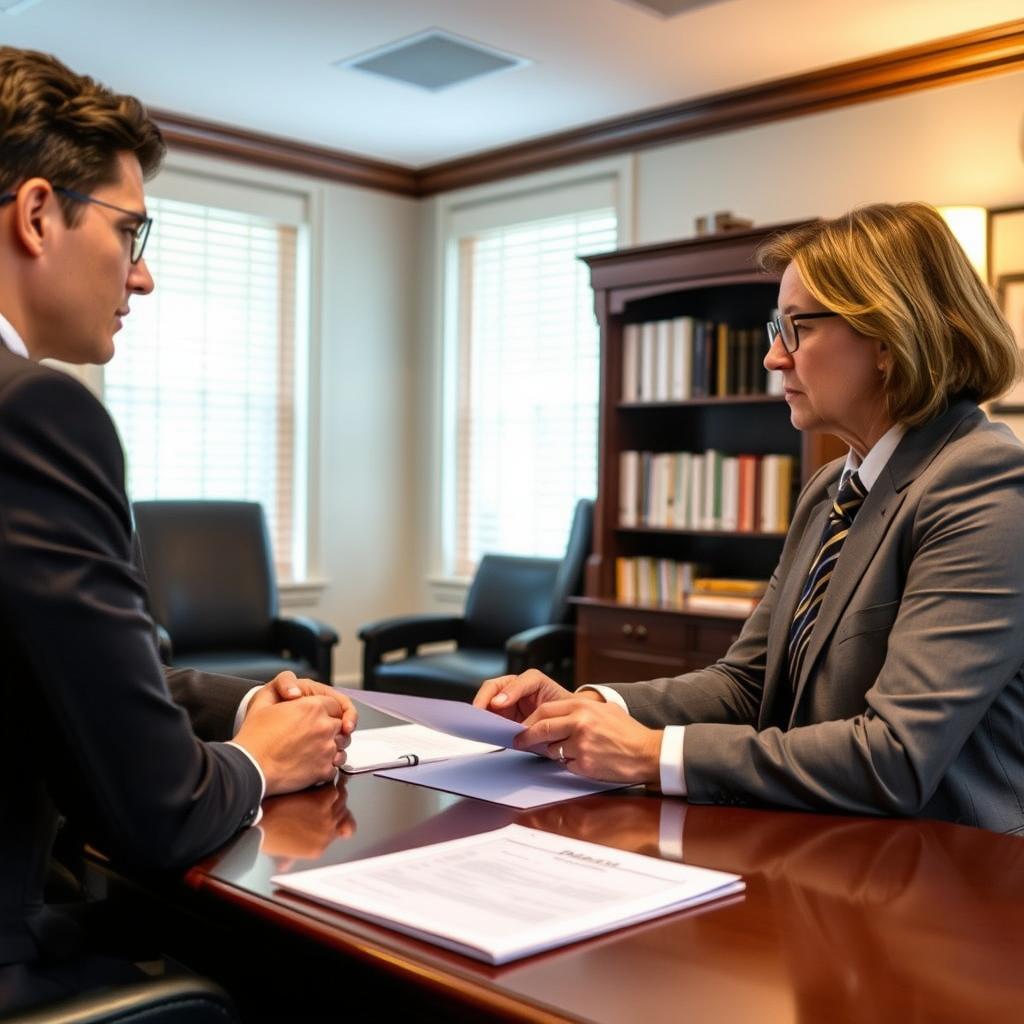
Isle of Wight County Rehabilitative Alimony Lawyer — What Are Your Rights?
Rehabilitative alimony in Isle of Wight County is a time-limited support order under Va. Code § 20-107.1, designed to help a spouse become self-supporting. The Law Offices Of SRIS, P.C. provides focused legal guidance on securing or contesting this support. Understanding the specific requirements and evidentiary standards in Isle of Wight County Circuit Court is critical to your case’s outcome.
Understanding Rehabilitative Alimony in Virginia
Rehabilitative alimony is a specific type of spousal support defined under Virginia law. Its primary purpose is not indefinite maintenance, but to provide a dependent spouse with financial resources for a defined period to obtain education, training, or work experience necessary to re-enter the workforce and achieve self-sufficiency. This contrasts with permanent or indefinite support, which may be awarded in long-term marriages where self-sufficiency is not feasible.
Last verified: April 2026 | Isle of Wight County Circuit Court | Virginia General Assembly
The firm, founded in 1997 by a former prosecutor, brings a strategic approach to family law matters. We analyze the specific factors the court must consider to build a compelling case for or against rehabilitative support.
Official Legal Resources
For the exact statutory language governing all forms of spousal support in Virginia, refer to the official Va. Code § 20-107.1 (official Virginia General Assembly website). For local court procedures and filing information, visit the Isle of Wight County Circuit Court website.
Procedural Insights for Isle of Wight County
Success with a rehabilitative alimony case in Isle of Wight County requires more than just citing the statute. The court will scrutinize a detailed rehabilitative plan. This plan must outline the specific steps—such as a defined educational program, vocational training, or job search timeline—the requesting spouse will take, the associated costs, and a realistic timeframe for achieving self-support. A generic request without a concrete plan is unlikely to succeed.
- Consultation & Case Assessment: Discuss your situation and goals to determine if rehabilitative alimony is a relevant issue in your divorce or support case.
- Develop a Rehabilitative Plan: If seeking support, work with your attorney to draft a detailed, evidence-backed plan outlining education, training, job search steps, costs, and a timeline.
- Gather Financial Documentation: Compile full proof of need, ability to pay, and all costs associated with the proposed rehabilitative plan.
- File Motions & Negotiate: Your attorney will file the necessary motions for support and engage in settlement negotiations, presenting your plan or challenging the opposing party’s plan.
- Court Presentation: If no settlement is reached, your attorney will present evidence and argue before the judge why the rehabilitative alimony request should be granted, modified, or denied based on the statutory factors.
Types of Spousal Support in Virginia
In Isle of Wight County, a court may award different forms of spousal support depending on the circumstances, including temporary spousal support during the divorce process and transitional alimony for short-term needs post-divorce.
It is important to distinguish rehabilitative alimony from other forms of support. Temporary spousal support (pendente lite) is awarded while the divorce is pending to maintain the status quo. A temporary spousal support lawyer Isle of Wight County can help secure this interim relief. Transitional alimony is a short-term award to assist with the adjustment to single life but is not tied to a specific plan for achieving self-sufficiency. A transitional alimony lawyer Isle of Wight County addresses these distinct, time-limited needs. Rehabilitative alimony is uniquely focused on a concrete path to financial independence.
Results may vary. Prior results do not aim for a similar outcome.
Our Approach to Family Law Advocacy
Since 1997, the Law Offices Of SRIS, P.C. has been built on the principle of “Advocacy Without Borders.” Our team combines extensive knowledge of Virginia’s family law statutes with a practical understanding of how they are applied in local courts. For instance, Mr. Sris’s background includes personally working to amend Virginia’s equitable distribution statute, Va. Code § 20-107.3, demonstrating a deep commitment to the development of family law in the state.
Focused Legal Support
Our firm provides dedicated representation in family law matters. We prepare each case with attention to the specific details that Isle of Wight County judges consider when ruling on support issues. Mr. Sris, the firm’s founder and a former prosecutor with admissions in multiple states, oversees the firm’s strategic direction, ensuring all clients receive thorough and considered representation.
Results may vary. Prior results do not aim for a similar outcome.
Law Offices Of SRIS, P.C.
Serving Isle of Wight County and surrounding communities.
Toll-Free: (888) 437-7747 | Local: (804) 201-9009
By appointment only. 24/7 phone consultations.
Frequently Asked Questions
What is the main purpose of rehabilitative alimony?
It is to provide limited financial support so a spouse can gain education, training, or work experience to become self-supporting. It is not intended as permanent maintenance.
How long can rehabilitative alimony last in Virginia?
It depends. The duration must be explicitly stated in the court order and is typically tied directly to the length of the approved rehabilitative plan, such as the time needed to complete a degree or certification program. It cannot exceed half the length of the marriage unless exceptional circumstances are proven.
Can rehabilitative alimony be modified or terminated?
Yes. It can be modified if there is a material change in circumstances, or terminated early if the receiving spouse remarries, cohabitates, or fails to make reasonable efforts under the rehabilitative plan.
What is the difference between rehabilitative and transitional alimony?
Rehabilitative alimony requires a formal plan for achieving self-sufficiency. Transitional alimony is for short-term adjustment to single life (like covering relocation costs) but does not require a specific educational or vocational plan.
Do I need a specific plan to ask for rehabilitative alimony?
Yes. A detailed, evidence-based rehabilitative plan is the cornerstone of a request for this type of support. Without it, a court is very unlikely to grant an award.
Virginia Family Law Attorney | Suffolk Family Law Lawyer | Isle of Wight County Divorce Lawyer
Last verified: April 2026. Information is current as of this date. Laws change—contact Law Offices Of SRIS, P.C. at (888) 437-7747 for current guidance.
For the background behind an Isle of Wight County case, our page explains how Virginia handles rehabilitative alimony.