
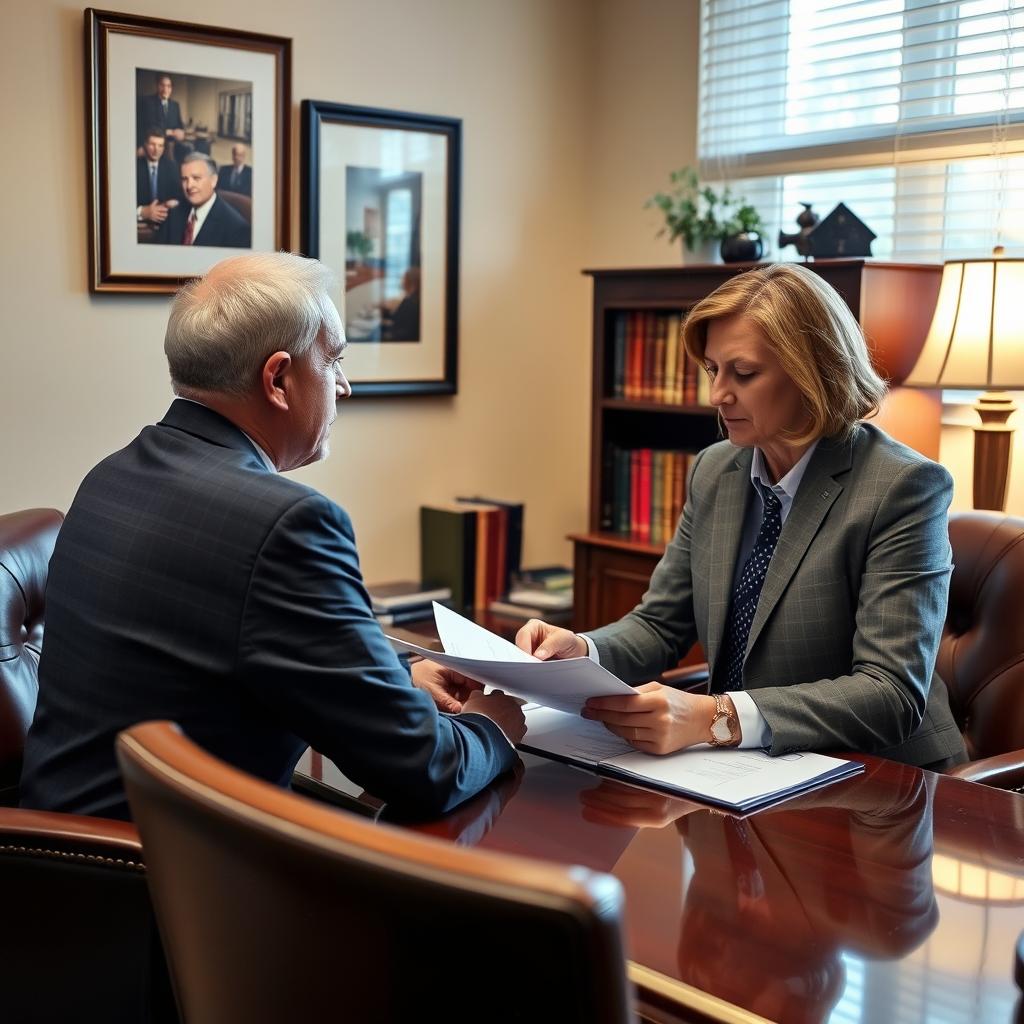
Business Succession Lawyer Rappahannock County, VA
For business owners in Rappahannock County, Virginia, the long-term health of a family enterprise often depends on a clear succession plan. Whether you operate a vineyard near Washington, a farm in Sperryville, or a retail shop in Flint Hill, a well-structured succession strategy preserves the value you have built and protects the people who depend on that business. Law Offices Of SRIS, P.C., founded in 1997, assists owners throughout Rappahannock County with the legal tools that make a smooth transition possible — from drafting buy-sell agreements and operating agreements to coordinating ownership structures that reflect your family’s goals. Mr. Sris and his Of Counsel team work with you to anticipate issues that can arise when an owner retires, becomes disabled, or passes away, so that the business continues without disruption. To discuss your specific situation, reach Law Offices Of SRIS, P.C. at (888) 437-7747. Law Offices Of SRIS, P.C. — Advocacy Without Borders.
What Business Succession Means in Rappahannock County
Rappahannock County’s economy is driven by agriculture, tourism, and closely held businesses that often span generations. For many families, the business is not just a source of income — it is a legacy. Without a formal succession plan, however, the death or incapacity of an owner can force a hasty sale, create disputes among heirs, or expose the entity to unintended tax and liability consequences. Business succession planning addresses these risks through legal instruments that designate how ownership and management authority will transfer and under what financial terms.
Matters involving business succession in Rappahannock County may be heard in the Rappahannock County Circuit Court, which handles civil disputes, probate proceedings, and corporate matters. The statutory framework that governs most Virginia businesses includes the Virginia Stock Corporation Act (Va. Code § 13.1-601 et seq.), the Virginia Limited Liability Company Act (§ 13.1-1000 et seq.), and the Virginia Uniform Partnership Act (§ 50-73.79 et seq.). An experienced attorney evaluates which entity structure best supports a succession plan and drafts the governance documents — corporate bylaws, operating agreements, or partnership agreements — that make the plan enforceable. Whether a business is structured as an LLC, a corporation, or a general partnership, the right legal foundation helps prevent uncertainty when a transition moment arrives.
How Mr. Sris and His Of Counsel Handle Business Succession Cases
Every succession plan begins with a thorough review of the business’s current structure and the owner’s personal objectives. Mr. Sris and his Of Counsel team examine the existing operating agreement, corporate bylaws, or partnership agreement, and then discuss whether the goals call for a gradual transfer of equity to family members, a sale to a key employee, or a buyout triggered by a future event. Where no formal entity exists, the team advises on formation choices that align with the succession strategy — for example, an LLC for a family farm that wants to retain flexibility or a corporation for a growing commercial operation.
Once the direction is set, the legal work includes drafting or amending buy-sell provisions, shareholder agreements, and cross-purchase arrangements that establish a fair valuation method and funding mechanism. The team also coordinates with estate planning counsel to integrate wills, trusts, and powers of attorney so that the business transition works in harmony with the owner’s overall estate plan. Throughout the process, Mr. Sris and his Of Counsel focus on minimizing conflict among stakeholders and ensuring that the chosen structure complies with Virginia’s business entity statutes and any applicable regulatory requirements.
About Mr. Sris and His Of Counsel Team
Mr. Sris is the Owner and Founder of Law Offices Of SRIS, P.C. He has practiced law since 1997 and is admitted in Virginia, Maryland, the District of Columbia, New Jersey, and New York. Before entering private practice, Mr. Sris served as a prosecutor, experience that informs his strategic approach to negotiation and dispute resolution. He testified before the Virginia House Courts of Justice Committee in support of 2019 HB 635 (chief patron Del. David Bulova).
Mr. Sris is supported by a team of Of Counsel attorneys who are engaged through Excella. Together, Mr. Sris and his Of Counsel have achieved over 4,739 documented firm-wide results. Results may vary. The team handles business succession matters collaboratively, drawing on years of work with Virginia’s business entity laws to help owners structure transitions that reflect their wishes and protect their families.
The Virginia State Corporation Commission charges a filing fee for Articles of Organization for a domestic limited liability company.
Source: SCC business entity filings. SCC business entity filings
Reviewed by Mr. Sris, admitted in VA/MD/DC/NJ/NY.
A Virginia stock corporation pays a $75 charter fee plus a registration fee based on authorized shares when filing Articles of Incorporation with the State Corporation Commission.
Source: SCC business entity filings. SCC business entity filings
Reviewed by Mr. Sris, admitted in VA/MD/DC/NJ/NY.
Frequently Asked Questions
What does a business succession lawyer do?
A business succession lawyer helps an owner plan for the transfer of ownership and management of a company. This includes drafting buy-sell agreements, operating agreements, and corporate bylaws that define how equity and control pass when an owner retires, becomes disabled, or dies. The lawyer also coordinates with estate planning professionals to make sure the business transition works alongside wills, trusts, and tax strategies, and advises on entity choice to support the succession goals.
Do I need a lawyer to create a succession plan for my Rappahannock County business?
You are not legally required to hire a lawyer, but the legal instruments that make a succession plan enforceable — such as a properly drafted buy-sell agreement or an amendment to an operating agreement — must comply with Virginia’s business entity statutes. A lawyer who is familiar with the Virginia Stock Corporation Act, the Virginia LLC Act, and local court procedures can help you avoid provisions that a court might later find unenforceable and can address valuation, funding, and dispute-resolution mechanisms that a do-it-yourself template often overlooks.
How does business succession planning work for an LLC versus a corporation?
For an LLC, succession provisions are typically written into the operating agreement; members can specify buyout terms, transfer restrictions, and what happens upon a member’s death or withdrawal. For a corporation, the shareholders’ agreement and corporate bylaws govern stock transfers, and the board of directors may need to approve certain transfers. Each structure has different default rules under Virginia law, so the planning approach is tailored to the entity form to ensure the intended result is legally effective.
What happens if a business owner dies without a succession plan in Virginia?
If no succession plan exists, the owner’s interest in the business passes according to the owner’s will or, if there is no will, under Virginia’s intestacy statutes. This can mean that ownership transfers to a spouse or children who may not be involved in the business and may have conflicting goals. Without clear governance documents, the remaining owners may face deadlocks, forced liquidation, or court intervention. A succession plan avoids these outcomes by specifying in advance how ownership and management are to transfer.
Can a business succession plan be changed after it is created?
Yes. A succession plan is not a static document. As the business grows, as family circumstances change, or as tax laws evolve, the plan can be amended through new agreements or amendments to existing operating agreements, bylaws, or shareholder agreements. The process must follow the formal amendment procedures outlined in the existing governing documents and must comply with Virginia law. Regular review with a lawyer helps keep the plan aligned with the owner’s current objectives.
Attorney advertising. Prior results do not guarantee a similar outcome. Results may vary.
Case results depend on a variety of factors unique to each case.