
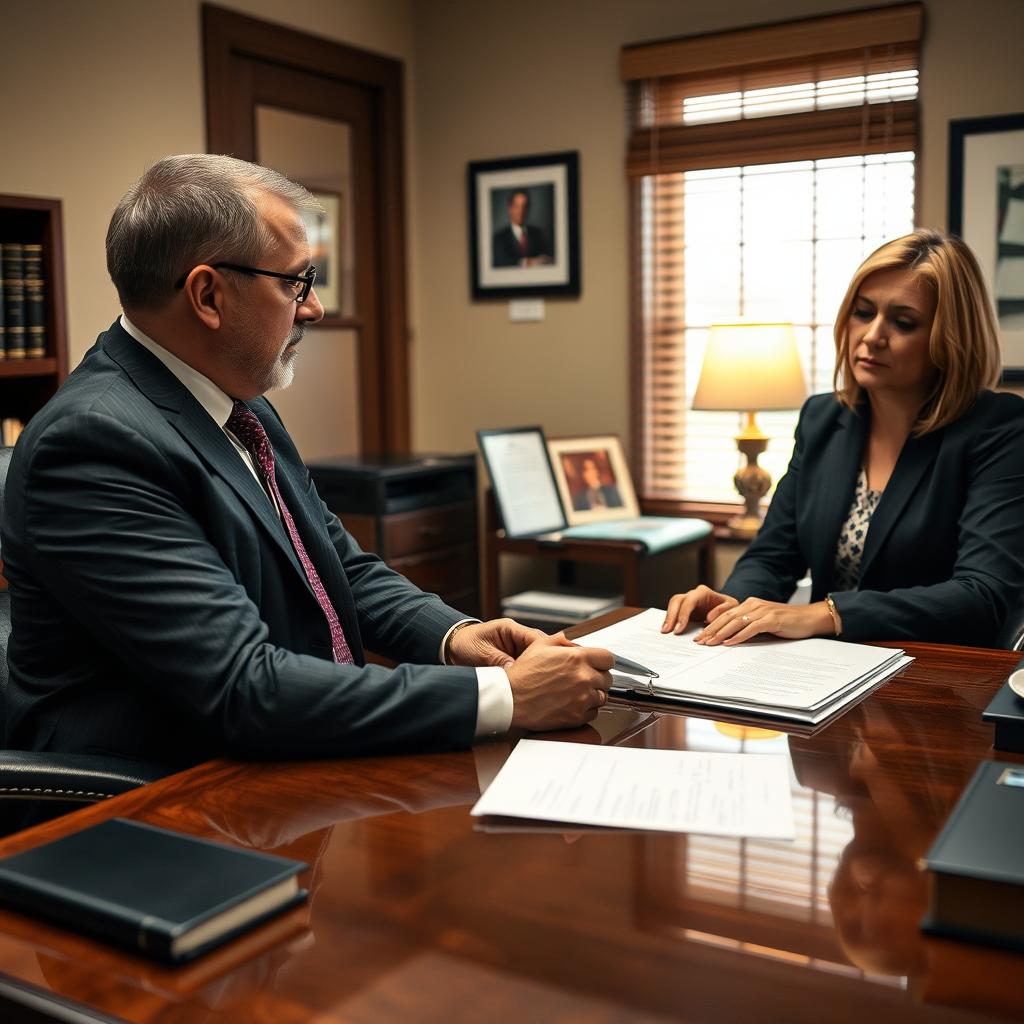
Property Division Lawyer Rockingham County, VA
Dividing marital property during a divorce in Virginia is governed by equitable distribution principles, not community property rules. For residents of Rockingham County, property division matters—from classifying real estate and business interests to valuing retirement accounts—are decided in the Rockingham County Circuit Court at 53 Court Square, Harrisonburg. Mr. Sris and his Of Counsel team at Law Offices Of SRIS, P.C. Concentrate on guiding clients through equitable distribution, whether the goal is a negotiated settlement or litigation of contested valuation disputes. The firm’s Shenandoah Location, located at 505 N Main St, Suite 103, Woodstock, VA 22664, serves Rockingham County and the surrounding Shenandoah Valley communities. Mr. Sris, a former prosecutor and practicing since 1997, draws on decades of experience helping Virginians protect their financial interests in divorce. Equitable distribution relies on a list of statutory factors that a judge applies to the specific facts of each marriage—a process that benefits from early, informed legal strategy. To discuss property division in your Rockingham County case, call Law Offices Of SRIS, P.C. at (888) 437-7747. Law Offices Of SRIS, P.C. – Advocacy Without Borders.
What Property Division Means in Rockingham County, Virginia
Property division in Rockingham County follows Virginia Code § 20-107.3, which directs the court to classify assets as marital, separate, or hybrid and then distribute the marital estate equitably—fairly, but not necessarily equally. The Rockingham County Circuit Court, located at 53 Court Square in Harrisonburg, exercises exclusive original jurisdiction over all divorce and equitable distribution matters in the county. The court evaluates 11 statutory factors, including the duration of the marriage, the contributions of each spouse to the well-being of the family, the value and liquidity of the assets, and the circumstances surrounding the dissolution of the marriage. For residents of Harrisonburg, Bridgewater, Dayton, Elkton, Timberville, Broadway, and the surrounding Shenandoah Valley area, these factors guide the judge’s final decree.
Under Va. Code § 20-107.3, Virginia courts divide marital property equitably, considering 11 statutory factors.
Source: Virginia Code § 20-107.3. Va. Code § 20-107.3
Reviewed by Mr. Sris, admitted in VA/MD/DC/NJ/NY.
Marital property generally includes any asset acquired during the marriage, regardless of which spouse’s name appears on the title, with the exception of gifts from a third party or inheritances. Separate property—assets owned before the marriage or received as a gift or inheritance—remains with the owning spouse, though the court can trace how separate contributions were used and may adjust the distribution accordingly. Real estate, business holdings, investment accounts, pensions, and stock options are all subject to equitable classification and valuation, and forensic accountants are frequently engaged when the marital estate is detailed. Rockingham County family law practitioners routinely work with local mediators and valuation professionals to move toward a comprehensive property settlement agreement, but when an agreement cannot be reached, the Circuit Court will schedule an equitable distribution hearing. Because the standard is equitable, not automatic 50/50, the outcome depends heavily on how well the facts are presented to the judge. Engaging counsel who understands the Rockingham County court’s expectations helps ensure that the financial interests of each spouse are fully developed in the record.
How Mr. Sris and His Of Counsel Handle Property Division Cases
Mr. Sris and his Of Counsel begin each property division matter by identifying and documenting every asset that may be at issue, including real property, closely held businesses, professional practices, brokerage accounts, retirement funds, and deferred compensation arrangements. The team works with forensic accountants and financial analysts when needed to establish accurate values, then evaluates how the statutory factors under Va. Code § 20-107.3 apply to the specific facts of the marriage. Where possible, the goal is to negotiate a comprehensive property settlement agreement that resolves all financial issues without a contested hearing; this approach often reduces the time and expense a family spends in litigation. Uncontested divorces with a signed separation agreement can typically be finalized in a matter of months after filing, while contested equitable distribution hearings may take significantly longer depending on the detail of the asset base and the court’s docket. Mr. Sris and his Of Counsel bring over 120 years of combined legal experience to property division matters. Results may vary.
When litigation becomes necessary, the team prepares a detailed equitable distribution presentation for the Rockingham County Circuit Court. That includes marshaling the evidence of each spouse’s contributions to the acquisition, preservation, and growth of marital assets, and addressing any claims of waste or dissipation. Mr. Sris and his Of Counsel also handle the enforcement of property division orders and, when circumstances change, modifications that may be permitted under Virginia law. Throughout the process, the firm keeps the client informed of the practical timeline and cost factors so that decisions are made with a clear understanding of the road ahead. The filing fee for a divorce complaint is approximately $86, and additional costs such as service of process and potential mediator or guardian ad litem fees can apply; the firm provides a realistic assessment of what to expect early in the engagement. Regardless of whether the case resolves through a settlement or a final hearing, Mr. Sris and his Of Counsel focus on protecting the client’s long-term financial well-being.
About Mr. Sris and His Of Counsel Team
Mr. Sris founded Law Offices Of SRIS, P.C. in 1997 and has practiced law across Virginia, Maryland, the District of Columbia, New Jersey, and New York for nearly three decades. A former prosecutor, he brings a disciplined, strategic approach to every family law matter. Mr. Sris testified before the Virginia House Courts of Justice Committee in support of 2019 HB 635 (chief patron Del. David Bulova). His Of Counsel team consists of experienced attorneys who are engaged on a matter-specific basis, enabling the firm to match the right professional resources to the needs of each property division case. All attorneys work collaboratively under Mr. Sris’s direction, and the firm maintains a documented record of over 4,739 case results across practice areas since 1997, including 30 in Rockingham County. Results may vary.
Frequently Asked Questions
How is marital property divided in a Virginia divorce?
Virginia divides marital property under the equitable distribution standard, not community property. The court classifies assets as marital, separate, or hybrid, then distributes the marital estate based on a list of 11 statutory factors. The goal is a fair—though not necessarily equal—division. Property division matters in Rockingham County are heard in the Circuit Court.
Is Virginia a community property state?
No. Virginia is an equitable distribution state, meaning the court considers fairness rather than automatically splitting assets 50/50. The distinction is critical: a spouse may receive more or less than half of the marital estate depending on the factors evaluated under Va. Code § 20-107.3.
What is separate property in a Virginia divorce?
Separate property includes assets owned before the marriage, as well as gifts or inheritances received by one spouse during the marriage. Separate property remains with the owning spouse unless it has been commingled with marital assets. Tracing the source and use of funds is a key part of the property division analysis.
Can I keep my retirement account in the divorce?
The marital portion of a retirement account—contributions and growth during the marriage—is generally subject to equitable distribution. The value of the marital share must be calculated and divided according to the factors in Va. Code § 20-107.3. A qualified domestic relations order (QDRO) is often used to effectuate the division without early withdrawal penalties.
Do I need a lawyer for property division in Rockingham County?
While no rule requires a lawyer, property division involves detailed legal and financial issues that can have long-term consequences. An attorney helps identify all assets, properly classify them, and present the strong case to the court under the equitable distribution factors. Early legal guidance can also help avoid costly mistakes in disclosure and valuation.
How long does property division take in Rockingham County?
If both spouses agree on all terms and have signed a separation agreement, the property division can be resolved as part of an uncontested divorce, often in two to four months after filing. Contested cases—particularly those involving business valuations or disputed asset characterizations—can take nine to eighteen months or more. The actual timeline depends on the detail of the marital estate and the court’s calendar. To discuss the details of your matter, contact Law Offices Of SRIS, P.C. at (888) 437-7747.
Also serving these Virginia localities: Family Law Clarke County · Family Law Shenandoah County · Family Law Frederick County · Family Law Warren County · Family Law Augusta County
Helpful Virginia legal resources: Va. Code § 20-107.3 (Equitable Distribution) · Virginia Judicial System
Attorney advertising. Prior results do not guarantee a similar outcome. Results may vary.
Case results depend on a variety of factors unique to each case.
Rockingham County is one part of a wider practice, and our page on property division lawyer Virginia covers the process from start to finish.