
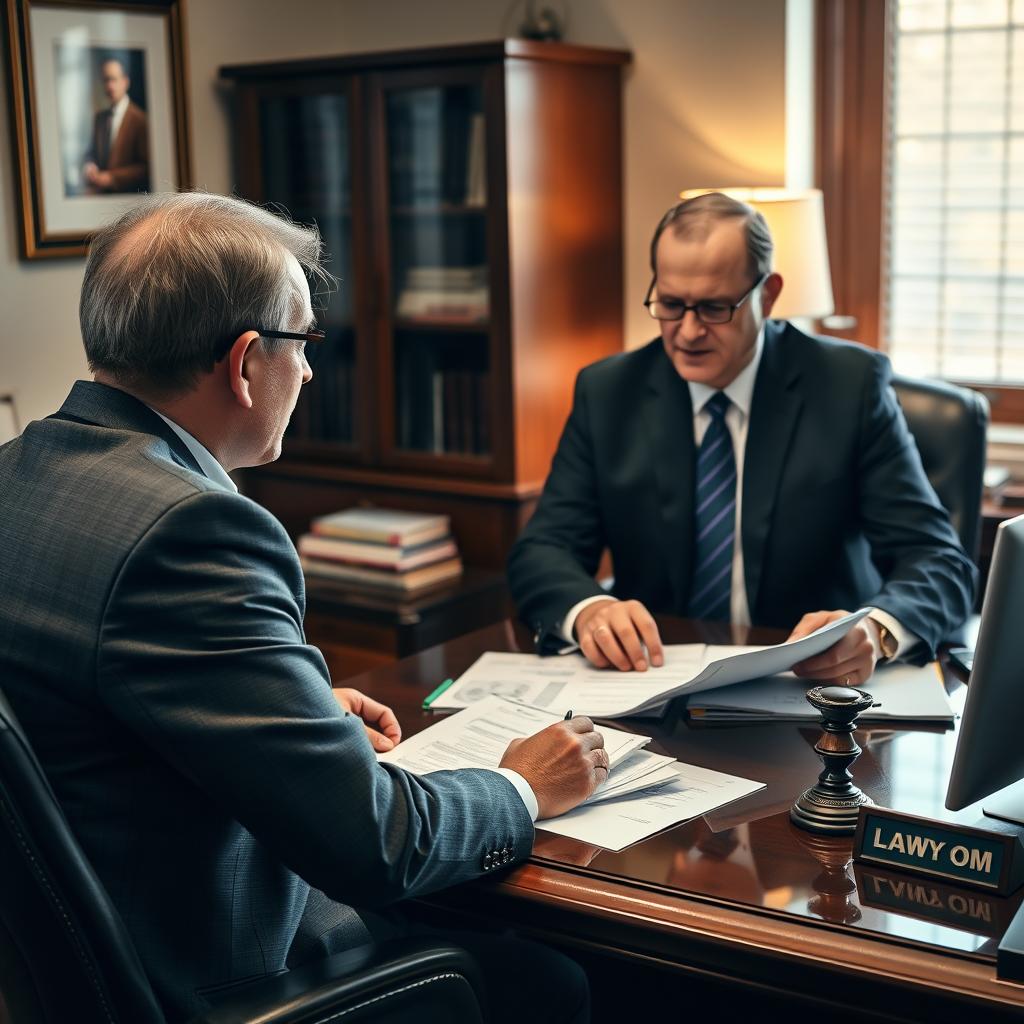
False Statements to a Federal Agent lawyer Virginia, VA
Making a false statement to a federal agent is a serious federal felony under 18 U.S.C. § 1001, punishable by up to five years in prison. A statement made to an FBI agent, DEA investigator, IRS-CI special agent, or any other federal official during an interview, on a government form, or in any matter within federal jurisdiction can lead to indictment in U.S. District Court. If you are under investigation or already facing charges in Virginia, having experienced defense counsel at the earliest stage is critical. Mr. Sris, Owner and Founder of Law Offices Of SRIS, P.C., is a former prosecutor who has practiced federal criminal defense since 1997. Mr. Sris and his Of Counsel team represent individuals in the Eastern District of Virginia and the Western District of Virginia, working to protect their rights and achieve the most favorable outcome possible. To request a consultation, call (888) 437-7747. Law Offices Of SRIS, P.C. – Advocacy Without Borders.
What False Statements to a Federal Agent Means in Virginia
Federal false-statement charges under 18 U.S.C. § 1001 are prosecuted in the U.S. District Courts for the Eastern District of Virginia (Alexandria, Richmond, Norfolk, and Newport News divisions) and the Western District of Virginia (Roanoke, Harrisonburg, Lynchburg, and Abingdon divisions). The statute makes it a crime to knowingly and willfully make any materially false, fictitious, or fraudulent statement or representation in any matter within the jurisdiction of the executive, legislative, or judicial branch of the United States. The government must prove that the statement was material—meaning it had a natural tendency to influence, or was capable of influencing, a federal agency’s decision or function.
Common scenarios include false answers during an FBI voluntary interview, material misrepresentations on a federal benefits application, false statements to an IRS agent during an audit, or inaccurate information provided to an ATF or DEA investigator. Because federal investigative agencies often deploy multiple interviewers and record conversations, the government frequently has a detailed record of precisely what was said. Virginia residents and businesses that interact with federal regulators, law enforcement, or administrative agencies can face exposure when a statement, even if initially viewed as minor, is later deemed material. Conviction does not require that the statement actually impacted the agency’s decision; it need only have been capable of doing so.
In the federal system, there is no parole, and the U.S. Sentencing Guidelines play a central role in determining a sentence. The U.S. Attorney’s Office in both the Eastern and Western Districts of Virginia—known for high conviction rates—devotes significant resources to white-collar and regulatory prosecutions. Early engagement with defense counsel is therefore essential, whether you have already been contacted by agents, received a target letter, or simply want to understand your exposure before speaking to investigators.
How Mr. Sris and His Of Counsel Handle False Statements Cases
Because a false-statement charge often turns on the precise words used during an encounter and the context in which they were spoken, the defense team begins by examining the entirety of the government’s evidence. Mr. Sris and his Of Counsel review agent reports, interview memoranda, audio or video recordings, emails, and any other documentary record. They evaluate whether the alleged statement was actually false, whether it was knowingly made, and whether the government can prove materiality as defined by the relevant case law. In many instances, what appears to be a false statement in an agent’s summary is ambiguous or incomplete when compared to the full record.
If an indictment is returned, the team moves actively to challenge the charges through pretrial motions, including motions to suppress evidence that was obtained in violation of a defendant’s Fifth or Sixth Amendment rights. The federal discovery process under Rule 16 of the Federal Rules of Criminal Procedure and the government’s obligations under Brady v. Maryland require the disclosure of material that may be favorable to the defense. Mr. Sris and his Of Counsel leverage their experience in federal court to identify discovery violations, challenge the admissibility of statements, and negotiate with federal prosecutors for a dismissal, a charge reduction, or a favorable plea when that serves the client’s interests. At trial, the defense presents a unified narrative that contests the government’s version of events and underscores the high burden of proof the government must meet.
About Mr. Sris and His Of Counsel Team
Mr. Sris, Owner and Founder of Law Offices Of SRIS, P.C., has practiced law since 1997. As a former prosecutor, he understands how the government builds a case, evaluates witness credibility, and decides to pursue charges. He is admitted to practice in Virginia, Maryland, the District of Columbia, New Jersey, and New York, and his experience spans state and federal courts across multiple jurisdictions. Mr. Sris has testified before the Virginia House Courts of Justice Committee in support of 2019 HB 635 (chief patron Del. David Bulova), reflecting a commitment to understanding the legislative framework that shapes criminal and family law practice.
Mr. Sris is supported by a team of Of Counsel attorneys who bring additional depth in federal criminal matters. Collectively, Mr. Sris and his Of Counsel bring significant combined experience and work collaboratively to evaluate each client’s case, formulate a defense strategy, and provide diligent representation through every stage of the federal process. The firm’s multi-state presence allows it to serve clients across Virginia and neighboring jurisdictions, ensuring that no matter where a federal investigation arises, capable counsel is available.
Frequently Asked Questions
What is the crime of false statements to a federal agent?
Under 18 U.S.C. § 1001, it is a federal felony to knowingly and willfully make a materially false statement or representation concerning any matter within the jurisdiction of a federal department or agency. The statement can be oral, written, or even a concealment that misleads. The government must prove the statement was false, the defendant knew it was false at the time, and it was material—meaning it could have influenced the agency’s decision. The penalty is up to five years in federal prison, and the Sentencing Guidelines may increase the sentence based on the underlying offense and the defendant’s criminal history. This statute applies to interviews with FBI agents, DEA investigators, federal inspectors, and any other federal official acting within the scope of their duties.
Do I need a federal criminal defense lawyer in Virginia if I am questioned by an agent?
Yes, immediately. Federal cases in both the Eastern and Western Districts of Virginia are prosecuted by the U.S. Attorney’s Office with significant investigative resources, including the FBI, DEA, IRS-CI, and ATF. State-court experience does not translate directly to the federal system, which has distinct rules for pretrial detention, discovery, and sentencing, and where there is no parole. Engaging an attorney before answering questions or receiving an indictment can materially affect the outcome. For guidance on your specific situation, reach Law Offices Of SRIS, P.C. at (888) 437-7747.
How does a federal false statements case progress in Virginia?
Typically, the investigation begins with a federal agency inquiry. If the U.S. Attorney’s Office decides to pursue charges, it will present evidence to a federal grand jury for indictment. After indictment, the defendant appears for an initial appearance and detention hearing, followed by arraignment. The district court then sets a discovery and motions schedule. Throughout this process, the defense can challenge the indictment, seek to suppress evidence, and negotiate with the government. A trial, if the case proceeds to that stage, is heard before a U.S. District Judge or a jury. Sentencing, if applicable, follows the U.S. Sentencing Guidelines, with the judge having discretion under United States v. Booker. Each step requires careful strategic consideration, and the timeline is driven by court scheduling and case complexity.
What possible defenses exist for a false statements charge?
Common defenses include demonstrating that the statement was not actually false, that it was not made knowingly, or that it was not material to the government’s function. Another avenue is challenging the circumstances under which the statement was obtained—for example, if it was the product of a custodial interrogation without Miranda warnings or if the agent’s report is inaccurate. Even if the underlying statement is problematic, negotiation may result in a deferred prosecution agreement or a plea to a lesser charge. The viability of any defense depends on the specific facts, and Mr. Sris and his Of Counsel evaluate every angle of the government’s case before formulating a strategy.
How can I contact a federal defense lawyer about a false statements matter in Virginia?
Call Law Offices Of SRIS, P.C. at (888) 437-7747 to request a consultation. The firm serves clients in all federal districts in Virginia, including the Eastern District’s Alexandria and Richmond divisions and the Western District. Mr. Sris and his Of Counsel are available to discuss your case, explain the process, and advise you on the trusted path forward. Consultation is by appointment.
Primary sources: 18 U.S.C. § 1001 | U.S. District Court for the Eastern District of Virginia | U.S. District Court for the Western District of Virginia
Attorney advertising. Prior results do not guarantee a similar outcome. Results may vary. Case results depend on a variety of factors unique to each case.
A false statements to a federal agent VA case is one part of obstruction, perjury & false statements work, and our page on subornation of perjury lawyer Virginia covers the wider process.