
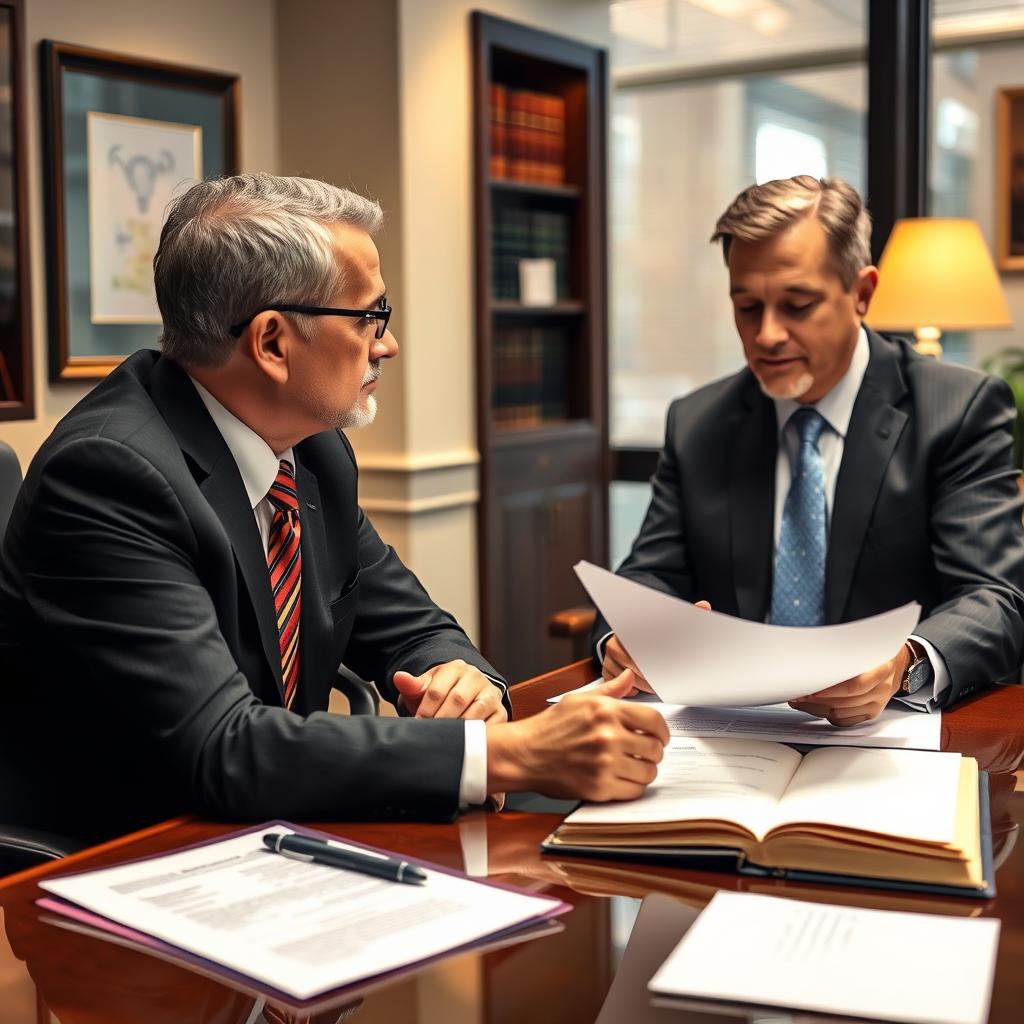
Action for Reformation Lawyer New Jersey — Correcting Legal Documents
An action for reformation in New Jersey is an equitable remedy to correct a written legal document, such as a contract or deed, that fails to reflect the true agreement of the parties due to a mutual mistake or fraud.
What Is an Action for Reformation Under New Jersey Law?
An action for reformation is a civil lawsuit filed to ask a court to change the language of a written instrument. It is governed by principles of equity, not a specific statute, but is recognized under New Jersey common law to prevent injustice. The core legal premise is that the written document does not accurately capture the mutual understanding or agreement reached by the parties involved. This remedy is strictly limited to correcting mistakes; it cannot be used to create a new agreement.
Last verified: April 2026 | New Jersey Superior Court, Chancery Division | New Jersey Courts
The firm’s founder, Mr. Sris, brings a strategic perspective honed from decades of civil litigation, ensuring that reformation actions are built on a solid factual and legal foundation from the outset.
Official Legal Resources
For reference, the New Jersey judiciary provides resources on civil procedure and equity actions. You can review the New Jersey Courts website for forms and rules. The official state legislative site contains the New Jersey Statutes which inform contract and property law underlying reformation claims.
The Process for Seeking Reformation in New Jersey
Successfully reforming a document requires proving a specific type of mistake existed at the time of signing. The process is detail-oriented and evidentiary. An action for reformation lawyer near me New Jersey from our team will gather the necessary proof, which often includes prior drafts, communications, and witness testimony to establish the true intent.
- Case Evaluation & Evidence Gathering: Your lawyer will review the disputed document, all related drafts, emails, and correspondence to identify the mistake and evidence of the true agreement.
- Filing the Complaint: A formal complaint is filed in the New Jersey Superior Court, Chancery Division, detailing the mutual mistake or fraud and requesting the court to reform the document.
- Discovery Phase: Both sides exchange evidence through depositions, document requests, and interrogatories to build their respective cases regarding the parties’ intent.
- Negotiation & Settlement: Many reformation actions settle once the evidence clearly demonstrates the error, skilled to a stipulated agreement to correct the document.
- Trial (If Necessary): If a settlement isn’t reached, the case proceeds to a bench trial where a judge will hear evidence and decide whether reformation is warranted.
Common Documents Subject to Reformation
In New Jersey, actions for reformation commonly involve correcting errors in real estate deeds, business contracts, loan agreements, and trust instruments where a typo, omitted term, or incorrect legal description alters the meaning.
| Document Type | Common Error | Legal Goal |
|---|---|---|
| Real Estate Deed | Incorrect property description or boundary line. | Correct the legal description to match the parcel actually purchased. |
| Business Contract | Wrong price, payment term, or delivery date due to clerical error. | Align the written contract with the terms both parties negotiated. |
| Loan Agreement | Incorrect interest rate or repayment schedule. | Reform the document to reflect the agreed-upon financial terms. |
| Trust or Will | Mistake in beneficiary name or asset distribution. | Correct the instrument to carry out the settlor’s or testator’s true intent. |
Results may vary. Prior results do not guarantee a similar outcome.
Why Choose Our Firm for Your Reformation Action
Founded in 1997, Law Offices Of SRIS, P.C. operates on the principle of “Advocacy Without Borders.” Our civil litigation team, led by Mr. Sris, understands that a single error in a contract or deed can have significant financial and legal consequences. We combine meticulous attention to detail with assertive advocacy to correct these mistakes through the legal system. Our approach is to resolve matters efficiently but prepare every case thoroughly for trial if needed.
Case Results in Civil Litigation
Our firm has a documented history of achieving favorable outcomes in civil matters. While every case is unique, our strategic approach to litigation is consistent. For example, we have successfully advocated for clients in matters requiring precise legal interpretation and evidence presentation, skills directly applicable to reformation actions.
Results may vary. Prior results do not guarantee a similar outcome.
Law Offices Of SRIS, P.C.
Toll-Free: (888) 437-7747 | Local: (732) 382-6073
By appointment only.
24/7 phone consultations — meetings by appointment only.
Our New Jersey civil litigation team serves clients across the state. If you are searching for an affordable action for reformation lawyer New Jersey, we offer clear fee structures and focused representation to address your specific document correction needs efficiently.
Frequently Asked Questions: Action for Reformation in NJ
What is the difference between reformation and rescission of a contract?
Yes, there is a major difference. Reformation corrects a mistake in a written document so the contract continues in an amended form. Rescission cancels or voids the entire contract as if it never existed, typically due to fraud, incapacity, or a fundamental mistake.
Can a unilateral mistake be grounds for reformation in New Jersey?
It depends. Generally, no. Reformation typically requires a mutual mistake—where both parties shared the same misunderstanding. However, if one party’s unilateral mistake was known to the other party who remained silent, or was the result of fraud, a court may grant reformation based on equitable principles.
How long do I have to file an action for reformation?
The statute of limitations for an action for reformation in New Jersey is generally six years. The clock usually starts from the date the mistake was or should have been discovered. It is critical to consult a lawyer promptly to avoid missing this deadline.
What kind of evidence is needed to prove a mutual mistake?
Strong evidence includes preliminary drafts of the agreement, emails or letters discussing the terms, sworn affidavits from witnesses to the negotiations, and experienced testimony. The goal is to show convincingly what both parties actually intended versus what the erroneous document says.
Is an oral agreement enough to reform a written contract?
No, not by itself. The “parol evidence rule” generally bars using oral statements to contradict a written contract. However, an exception exists for proving a mutual mistake to seek reformation. The oral evidence must be clear, convincing, and show the written term does not reflect the prior agreement.