
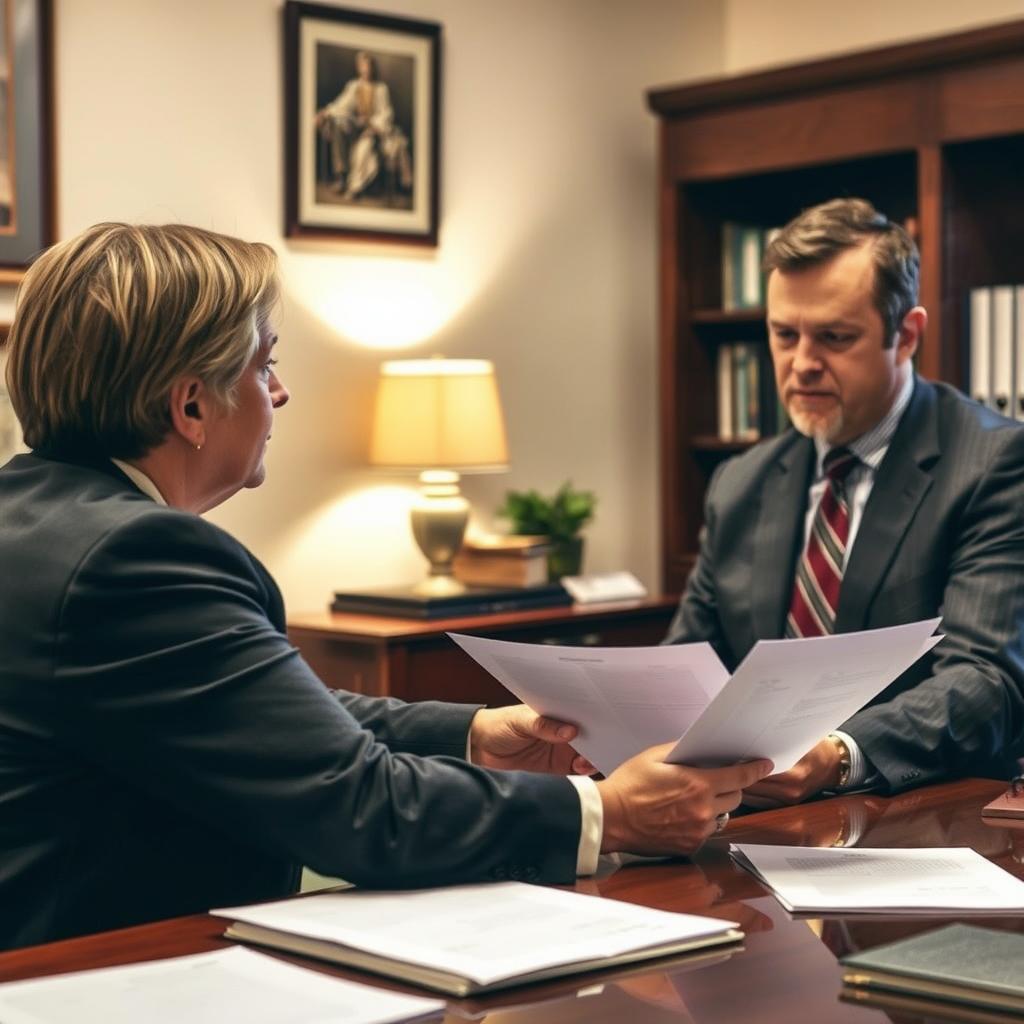
Arson/Bombing of Federal Property lawyer Fluvanna County, VA
When a federal agency such as the FBI or ATF opens an investigation into an arson or bombing that targets a building or property owned by or occupied by the United States, the legal exposure is immediate and severe. These cases are prosecuted by the United States Attorney’s Office for the Western District of Virginia; they are not handled in state court. Fluvanna County residents who find themselves the subject of a federal inquiry—or who have already been indicted on charges involving the malicious destruction of federal property—need an attorney who understands the distinct rules, procedures, and sentencing exposure that apply in the federal system. Mr. Sris, a former prosecutor and the Owner and Founder of Law Offices Of SRIS, P.C., concentrates his practice on federal criminal defense in the Western District of Virginia, including the division that covers Fluvanna County. The firm’s Shenandoah location at 505 N Main St, Suite 103, Woodstock, VA 22664, serves clients in Palmyra, Fork Union, Lake Monticello, and throughout the county. By appointment only—call (888) 437-7747 to schedule a consultation. Law Offices Of SRIS, P.C. – Advocacy Without Borders.
What Arson/Bombing of Federal Property Means in Fluvanna County
Federal arson and bombing prosecutions rest on several overlapping statutes, most commonly 18 U.S.C. § 81 (arson within special maritime and territorial jurisdiction) and 18 U.S.C. § 844(f) (destruction of government property by fire or explosive). The government may also charge conspiracy, possession of a destructive device, or related offenses. Because the United States Attorney’s Office for the Western District of Virginia handles these cases, the matter will proceed in the U.S. District Court for the Western District of Virginia. Fluvanna County lies within the geographic footprint of that court, and its residents appear before the same federal judges and face the same federal sentencing guidelines as defendants anywhere in the Western District. The court maintains divisions in Roanoke, Charlottesville, Abingdon, Lynchburg, Harrisonburg, and Big Stone Gap; a case arising from conduct in Fluvanna County is typically heard in the Charlottesville division, though the government retains discretion to file elsewhere within the district.
The federal system does not offer parole. A defendant convicted under 18 U.S.C. § 844(f), for example, faces a maximum of not less than five and not more than twenty years of imprisonment—and, if the offense results in personal injury, the potential sentence escalates sharply. Beyond the term of incarceration, a conviction brings supervised release, restitution obligations, and a permanent felony record that affects employment, professional licensure, and firearm possession. Federal prosecutors bring these charges only after a thorough investigation, often involving forensic analysis, surveillance, and cooperating witnesses. Early engagement by defense counsel is therefore critical. A lawyer can work to protect the client’s rights during the grand-jury phase, argue for pretrial release, and begin developing a theory of the case long before an indictment is returned.
How Mr. Sris and the Firm’s Of Counsel Attorneys Handle Federal Arson/Bombing Charges
Federal arson and bombing investigations typically begin with a referral from local fire or law enforcement to a federal agency, most often the Bureau of Alcohol, Tobacco, Firearms and Explosives or the Federal Bureau of Investigation. Once the U.S. Attorney’s Office becomes involved, the matter moves to the federal grand jury. Mr. Sris and the firm’s Of Counsel attorneys focus first on pre-indictment representation. Where a client has received a target letter, a subpoena, or simply a visit from federal agents, the goal is to engage with the government early—before charges are filed. This can mean presenting exculpatory evidence through a proffer, challenging the admissibility of statements made during custodial interrogation, or negotiating for a pre-indictment resolution that avoids a felony conviction.
After indictment, the process follows the Federal Rules of Criminal Procedure. The initial appearance and detention hearing determine whether the defendant will remain in custody pending trial—a critical juncture in any federal case. The defense then moves into discovery, which in a federal arson matter is voluminous: fire-scene reports, laboratory analyses of accelerants and residues, cell-site location data, surveillance footage, and experienced attorney-witness disclosures. Motions practice—challenging the sufficiency of the indictment, seeking suppression of evidence, or compelling additional discovery—can shape the trajectory of the case. If the case proceeds to trial, Mr. Sris and the firm’s Of Counsel attorneys draw on decades of courtroom experience to cross-examine government attorneys, challenge the forensic evidence, and present a focused defense. In many federal cases, however, effective advocacy at the motion stage or during the plea-negotiation phase leads to a resolution that substantially limits the client’s exposure. Sentencing is governed by the advisory United States Sentencing Guidelines; the firm works to secure departures, variances, and downward adjustments where the facts and the law allow.
About Mr. Sris and the Firm’s Of Counsel Attorneys
Mr. Sris founded Law Offices Of SRIS, P.C. in 1997. He is a former prosecutor who now concentrates his practice on criminal defense in Virginia, Maryland, the District of Columbia, New Jersey, and New York. His understanding of how the government builds a federal case—from the grand-jury investigation through sentencing—informs every stage of his representation. Mr. Sris testified before the Virginia House Courts of Justice Committee in support of 2019 HB 635 (chief patron Del. David Bulova). He is supported by the firm’s Of Counsel attorneys, who bring additional trial and investigative experience to federal criminal matters. Together, Mr. Sris and the firm’s Of Counsel attorneys work to develop a defense strategy tailored to the unique facts of each client’s situation.
Frequently Asked Questions
What is arson or bombing of federal property under federal law?
Arson or bombing of federal property is the willful and malicious destruction of a building or property owned, occupied, or used by the United States by means of fire or an explosive device. The primary federal statutes are 18 U.S.C. § 81 (arson) and 18 U.S.C. § 844(f) (damage to government property by fire or explosive). These offenses are felonies; they are prosecuted exclusively in federal court regardless of where the act occurred. The federal government has jurisdiction because the property involved belongs to or serves the United States.
What should I do if I am under investigation for federal arson in Fluvanna County?
If you are under investigation, you should decline to speak with federal agents and immediately ask to speak with an attorney. Do not attempt to explain your side of the story to investigators without counsel present—any statement you make can be used against you. Preserving evidence on your own is also risky; you may inadvertently destroy something the government later claims was intentional. Contact a lawyer who handles federal criminal matters in the Western District of Virginia as soon as you suspect you are a target of a federal investigation.
How does a federal arson charge differ from a state arson charge?
The most significant difference is jurisdiction: federal charges involve property that belongs to or is occupied by the United States, while state charges arise from damage to private or state property. Federal cases are prosecuted by the U.S. Attorney’s Office and are subject to federal sentencing guidelines, which often yield longer sentences. Additionally, there is no parole in the federal system, and federal prosecutors have more extensive investigative resources, including the FBI, ATF, and federal forensic laboratories.
Do I need a lawyer for federal arson charges in Fluvanna County?
Yes—anyone facing federal arson or bombing charges needs a lawyer who is familiar with the U.S. District Court for the Western District of Virginia. The stakes are extraordinarily high: a conviction can mean decades in federal prison, restitution, and a lifetime felony record. An attorney can evaluate the government’s evidence, identify constitutional or procedural violations, negotiate with the Assistant United States Attorney, and present a compelling defense at sentencing. Self-representation in federal court is extremely risky because of the complex rules of procedure and evidence.
What defenses are available against federal arson charges?
Defenses can include challenging the identification of the defendant, the reliability of fire-origin and cause evidence, or the voluntariness of any confession. In some cases, the defense may argue that the property was not, in fact, federal property at the time of the fire—a jurisdictional element the government must prove. Expert witnesses are often essential: a defense fire investigator can review the government’s origin-and-cause analysis and expose flawed methodologies. Where the evidence is strong, counsel may pursue a negotiated plea that reduces the charge or the sentencing range.
How do I reach Law Offices Of SRIS, P.C. for a consultation?
Call (888) 437-7747 to speak with a member of the firm about scheduling a consultation regarding a federal arson or bombing matter. The firm’s Shenandoah location serves Fluvanna County and the surrounding region; appointments are by appointment only. A consultation allows Mr. Sris or one of the firm’s Of Counsel attorneys to assess the specific facts of your situation and explain how federal charges are commonly handled in the Western District of Virginia.
Attorney advertising. Prior results do not guarantee a similar outcome. Results may vary.
Case results depend on a variety of factors unique to each case.