
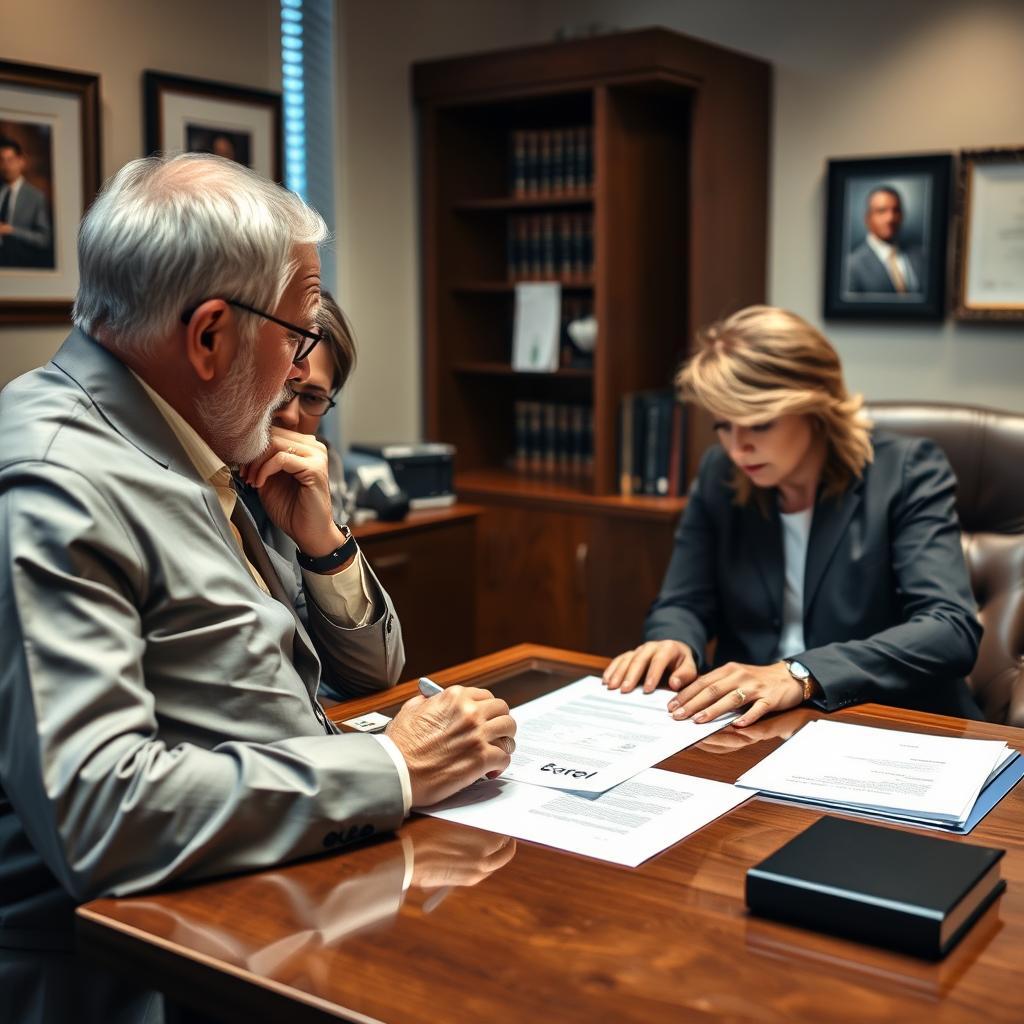
Ocean County Asylee Relative Petition Lawyer — How Can You Bring Your Family to the U.S.?
If you have been granted asylum in the U.S., you can petition for your spouse and unmarried children under 21 to join you by filing Form I-730, Refugee/Asylee Relative Petition. An experienced asylee relative petition lawyer Ocean County from Law Offices Of SRIS, P.C. can guide you through this complex process to reunite your family.
What Is an Asylee Relative Petition (Form I-730)?
The I-730 petition is the legal mechanism for a person granted asylum to bring certain immediate family members to the United States. The law governing this process is found in the Immigration and Nationality Act (INA) Section 208(b)(3). The petition must be filed within two years of the grant of asylum, with limited exceptions. Success depends on proving the qualifying family relationship and that the derivative beneficiaries were included on the principal asylee’s application or qualify as a spouse or child acquired after asylum was granted.
Last verified: April 2026 | U.S. Citizenship and Immigration Services (USCIS) | USCIS Policy Manual.
Official Resources & Legal Citations
Understanding the official rules is critical. The process is defined by federal statute and administered by U.S. Citizenship and Immigration Services (USCIS). You can review the official form and instructions directly from the source.
- Form I-730, Refugee/Asylee Relative Petition (USCIS Official Website)
- USCIS Laws and Policy Manual (U.S. Government)
The I-730 Petition Process in Ocean County: An Insider’s Guide
Filing an I-730 petition involves precise steps and documentation. A common procedural hurdle is gathering relationship evidence that meets USCIS standards, especially for marriages or births that occurred outside the U.S. without standard documentation. An affordable asylee relative petition lawyer Ocean County can help you compile alternative evidence, such as affidavits or school records, to satisfy these requirements.
- Confirm Eligibility: Verify you are the principal asylee and your family members (spouse, unmarried children under 21) qualify as derivatives.
- Gather Required Evidence: Collect proof of your asylum grant, identity documents, and relationship evidence (marriage/birth certificates, passports).
- Complete Form I-730: Accurately fill out the petition for each qualifying family member, ensuring no discrepancies with prior applications.
- Submit the Petition Package: File the forms, fees (or fee waiver request), and all supporting evidence to the correct USCIS lockbox.
- Respond to USCIS Requests: If USCIS issues a Request for Evidence (RFE) or notice of intent to deny, prepare and submit a timely, full response.
- Await Decision & Next Steps: Upon approval, beneficiaries outside the U.S. will process through a U.S. Embassy for visas, while those inside the U.S. can apply for adjustment of status.
Why Choose Our Firm for Your Family Reunification Case
Founded in 1997 by a former prosecutor, Law Offices Of SRIS, P.C. brings over 120 years of combined legal experience to immigration cases. Our tagline, “Advocacy Without Borders,” reflects our commitment to clients from all backgrounds. Mr. Sris, the firm’s founder, leads our immigration practice, applying a meticulous, detail-oriented approach to family-based petitions. We understand the significant importance of reuniting families and work diligently to handle the USCIS system on your behalf.
Consult a Dedicated Asylee Relative Petition Lawyer Near Me Ocean County
If you need to file an I-730 petition, having skilled legal guidance can make a significant difference. We offer clear advice on eligibility, help assemble a strong evidence package, and represent you in all communications with USCIS. Don’t handle this sensitive process alone; contact an asylee relative petition lawyer near me Ocean County for support.
Law Offices Of SRIS, P.C.
Toll-Free: (888) 437-7747 | Local: (609)-983-0003
By appointment only.
24/7 phone consultations.
Frequently Asked Questions: Asylee Relative Petitions
Who qualifies as a derivative beneficiary on an I-730 petition?
Yes, but only specific family members. You can petition for your spouse and your unmarried children who were under 21 years old when you were granted asylum. Children must be unmarried throughout the entire process. Parents, siblings, or married children do not qualify under this petition.
What is the deadline to file Form I-730?
It depends. Generally, you must file within two years of being granted asylum. However, USCIS may accept a late filing if you can demonstrate exceptional circumstances, such as serious illness or legal disability, that prevented a timely filing. Consulting a lawyer immediately if the deadline has passed is crucial.
Can I file for a family member who is already in the United States?
Yes. If your qualifying spouse or child is already in the U.S., you still file Form I-730 with USCIS. If the petition is approved, they may apply to adjust their status to asylee derivative without having to leave the country, provided they are in a lawful status or eligible for a waiver.
What happens if my I-730 petition is denied?
You have options. You may be able to file a motion to reopen or reconsider with USCIS, or appeal to the Administrative Appeals Office (AAO), depending on the grounds for denial. The specific strategy depends on the reason for denial and requires a prompt legal analysis to meet strict deadlines.
How long does the I-730 process take?
Processing times vary significantly. Currently, USCIS takes several months to over a year to adjudicate an I-730. After approval, processing at the National Visa Center and a U.S. Embassy abroad can add many more months. An attorney can help manage expectations and follow up on case status.
Attorney advertising. Prior results do not aim for a similar outcome.
Under Va. Code § 13.1-1000 et seq., state law governs this practice area.