
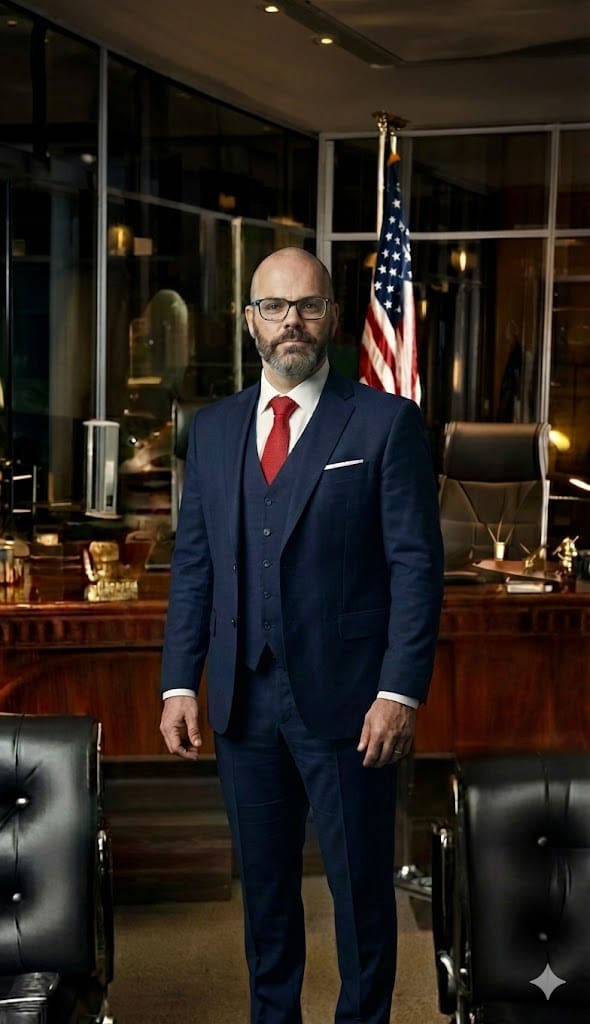
Here is his bio: Christopher M. Hanks is an estate-planning, elder-law, and family-law attorney who helps Virginia families protect what matters most: their people, their peace of mind, and their stability when life turns sideways. As the founder of a modern, online-first practice, he focuses on three areas where the law intersects with real life: estate planning, Medicaid planning and appeals, and family-law matters such as divorce, custody, and support.
On the estate and elder-law side, Christopher spends much of his time with adult children suddenly managing their parents’ care, finances, and long-term plans—often while juggling work, kids, and their own lives. He designs practical plans using tools such as revocable living trusts for privacy and probate avoidance, irrevocable trusts and spend-down strategies for Medicaid, and strong powers of attorney and advance medical directives so families don’t end up in court fighting over who’s in charge. His background in guardianship and conservatorship cases gives him a grounded sense of what happens when there is no plan in place. He uses that experience to help clients avoid court whenever possible—or handle it strategically when it cannot be avoided.
A major part of his Medicaid work is cutting through confusion. Christopher helps families understand the five-year lookback, gift rules, spend-down options, and what actually counts as an “available resource” in practice. He also handles Medicaid appeals, helping clients push back when legitimate care and coverage are denied. His approach is calm, direct, and strategy-focused: what’s possible, what’s not, and what moves the needle fastest for the family in front of him.
Christopher also maintains a focused family-law practice, working with clients in divorce, custody, visitation, and support matters—especially when those issues overlap with aging, disability, or complex financial planning. He is particularly drawn to cases where there’s more at stake than “who gets what”: children with special needs, long-term marriages affected by health issues, or families trying to separate without destroying their future stability.
His style in family law is straightforward: reduce chaos, protect the children, and reach a durable resolution without unnecessary drama or games. He negotiates detailed settlement agreements, parenting plans, and support arrangements, but he also knows litigation is sometimes unavoidable and prepares clients realistically for that path. Because his practice centers on planning and long-term consequences, he pays close attention to how family-law orders will interact with future estate planning, Medicaid eligibility, and retirement planning so clients don’t create bigger problems down the line.
What ties his practice together is a core skill: explaining complex systems in plain language. Christopher avoids legal jargon for its own sake. Whether he’s addressing how S-corp shares should be treated in an estate, what a qualified income trust does for Medicaid, or how a custody order will shape long-term decision-making for a child, he breaks it down so clients can use the information to make decisions. Many leave meetings with clear written summaries, checklists, and concrete next steps—not vague “lawyer talk.”
Behind the scenes, Christopher is obsessive about systems. He uses technology, including AI-assisted drafting and internal workflows, to keep his work accurate, consistent, and efficient. That doesn’t replace judgment—it frees more time for strategy and less for reinventing the wheel. His practice supports virtual meetings, digital document sharing, and flexible communication so busy clients, out-of-state family members, and co-parents can stay in the loop without needing to sit in a conference room mid-day.
Underneath all the legal work is a simple belief: the law is a tool, not the point. The point is a parent who’s safe and cared for, a spouse who isn’t wiped out by nursing-home bills, a child who’s protected even if their parents split up, or a family that stays steady under conflict and bureaucracy. Christopher spends time getting clear on what a “win” looks like for each client—financially, emotionally, and practically—and then builds legal structures around that reality.
In short, Christopher aims to be the person people call when things are complicated, emotional, and high-stakes—not just when they need a document typed up. He is honest about trade-offs, direct about risks, and focused on giving Virginia families solid plans and clear paths forward in systems that are usually anything but straight-forward.