
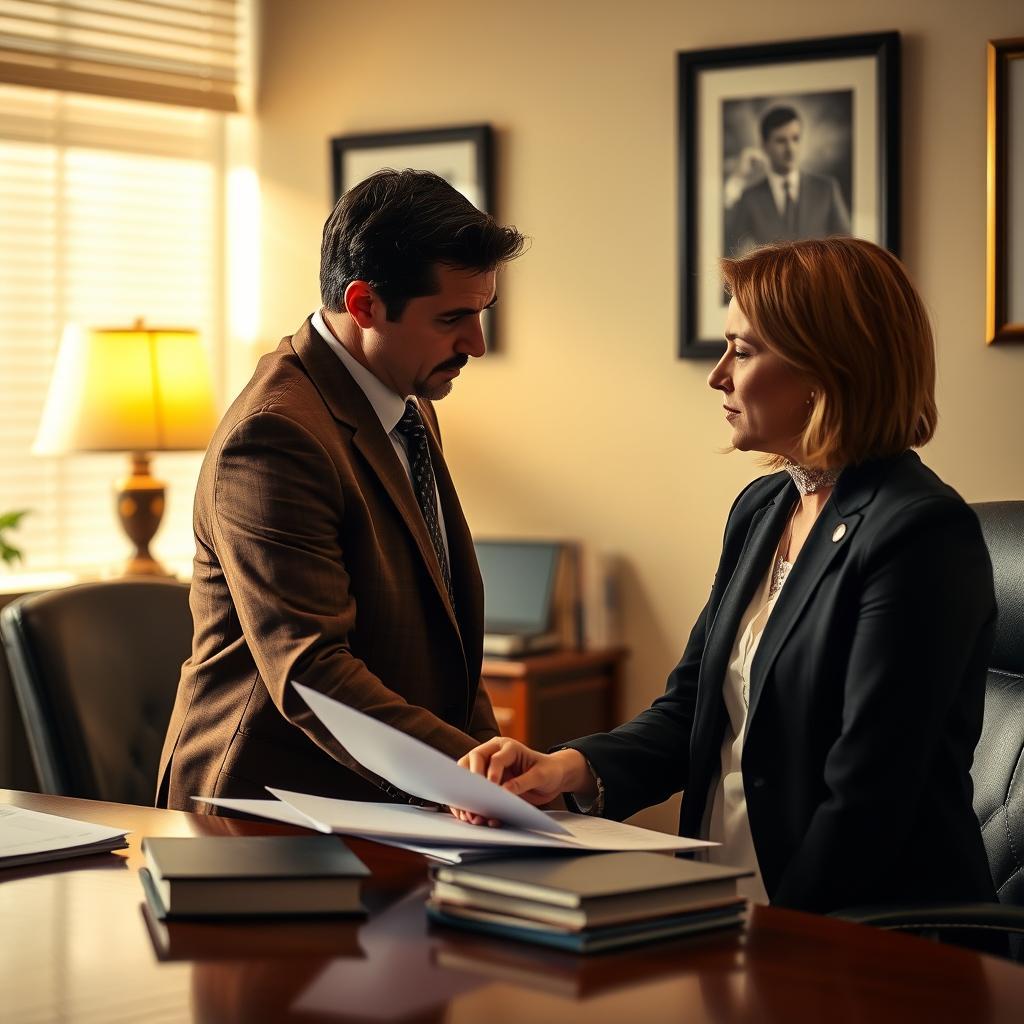
Can I Divorce My Wife For Not Sleeping With Me in Virginia?
In Virginia, you can file for divorce if your wife’s refusal to engage in sexual relations constitutes a ground for divorce, such as constructive desertion. The Law Offices Of SRIS, P.C. can assess your specific situation to determine if this meets the legal standard for marriage dissolution.
Legal Grounds for Divorce in Virginia
Virginia law provides specific grounds for ending a marriage. The question “Can I divorce my wife for not sleeping with me?” often relates to the ground of desertion or constructive desertion. Under Virginia Code § 20-91, a divorce can be granted on the grounds of willful desertion or abandonment for one year or more. Constructive desertion occurs when one spouse’s behavior, such as a complete and unjustified refusal of sexual relations, makes cohabitation intolerable or impossible, forcing the other spouse to leave. This can serve as a basis for divorce.
Last verified: April 2026 | Virginia Courts | Virginia General Assembly
Official Legal Resources
For the full text of Virginia’s divorce statutes, refer to the Virginia Code Title 20, Chapter 6 (official Virginia General Assembly site). For local court procedures and forms, visit the Virginia Judiciary’s Domestic Relations Forms page.
Proving Constructive Desertion in Your Case
Successfully arguing that a refusal of intimacy constitutes grounds for divorce requires specific proof. You must demonstrate that the refusal was unjustified, persistent, and has made the marriage relationship untenable. The court will look at the context and history of the marriage.
- Document the Situation: Keep a private journal noting dates, attempts at reconciliation, and any communication about the issue. Do not record conversations without consent.
- Seek Counseling: Attempting marriage counseling can be important. It shows the court you tried to resolve the issue and provides a professional assessment.
- Consult a Divorce Attorney: An attorney can evaluate whether your facts meet the legal standard for constructive desertion or another ground like cruelty.
- File the Complaint: Your lawyer will prepare and file a complaint for divorce, citing the appropriate ground and outlining the factual basis.
- Present Evidence: If the case is contested, you may need to present your evidence at a hearing to prove your grounds.
Potential Outcomes and Considerations
In Virginia, a divorce granted on fault-based grounds like constructive desertion can influence the court’s decisions on spousal support and the equitable distribution of marital assets.
If the court finds that one spouse’s conduct led to the divorce, it may award a more favorable distribution of property or spousal support to the innocent spouse. However, a no-fault divorce based on living separate and apart for one year is often simpler to prove and may be a more strategic path, even if fault grounds exist. A skilled divorce representation team can advise on the best legal strategy for your goals.
Our Experience in Family Law Matters
Founded in 1997 by former prosecutor Mr. Sris, the Law Offices Of SRIS, P.C. brings over 120 years of combined legal experience to family law cases. Our firm-wide record includes over 4,739 case results with a favorable outcome rate exceeding 93%. Mr. Sris’s deep understanding of Virginia law is underscored by his personal work in amending the state’s equitable distribution statute, Va. Code § 20-107.3. For cases involving the sensitive question of “Can I divorce my wife for not sleeping with me,” attorney Samantha Powers provides knowledgeable guidance.
Case Results in Family Law
The Law Offices Of SRIS, P.C. has extensive experience handling complex divorce grounds. Our firm-wide record includes favorable resolutions in contested divorces involving fault-based allegations.
Results may vary. Prior results do not aim for a similar outcome.
Success in these matters depends on careful evidence preparation and strategic legal argument, areas where our team, including secondary attorney Mr. Sris, a former prosecutor and firm founder, provides focused representation.
Contact Our Virginia Family Law Attorneys
Law Offices Of SRIS, P.C.
[FULL ADDRESS FROM GMB_ATTRIBUTES FOR VIRGINIA LOCATION COVERING THIS AREA]
Toll-Free: (888) 437-7747 | Local: [LOCAL PHONE FROM SAME GMB_ATTRIBUTES ROW]
By appointment only.
Our Virginia location is strategically positioned to serve clients across the state. We are a trusted family law lawyer near Virginia courts. We serve communities throughout the region. We offer 24/7 phone consultations at (888) 437-7747—meetings are by appointment only.
Frequently Asked Questions
Is refusing intimacy grounds for divorce in Virginia?
Yes, it can be. A complete, unjustified refusal of sexual relations may constitute constructive desertion, a fault-based ground for divorce if it makes cohabitation intolerable.
How long do we have to be separated for a no-fault divorce?
It depends. Virginia requires living separate and apart without cohabitation for one year if you have minor children, or six months if you have a signed separation agreement and no minor children.
Does fault affect property division in a divorce?
Yes. Under Va. Code § 20-107.3, a court can consider the circumstances and factors that led to the divorce, including fault grounds, when making an equitable distribution of marital property.
Should I see a divorce attorney even if we might reconcile?
Yes. Consulting a divorce attorney provides an understanding of your rights and options. This knowledge can inform your decisions, whether you pursue reconciliation or marriage dissolution.
What is the first step in filing for divorce?
The first step is to consult with a divorce filing lawyer to review your situation, identify the appropriate grounds, and prepare the necessary complaint to initiate the legal process.
Last verified: April 2026. Laws change—contact Law Offices Of SRIS, P.C. at (888) 437-7747 for current guidance.