
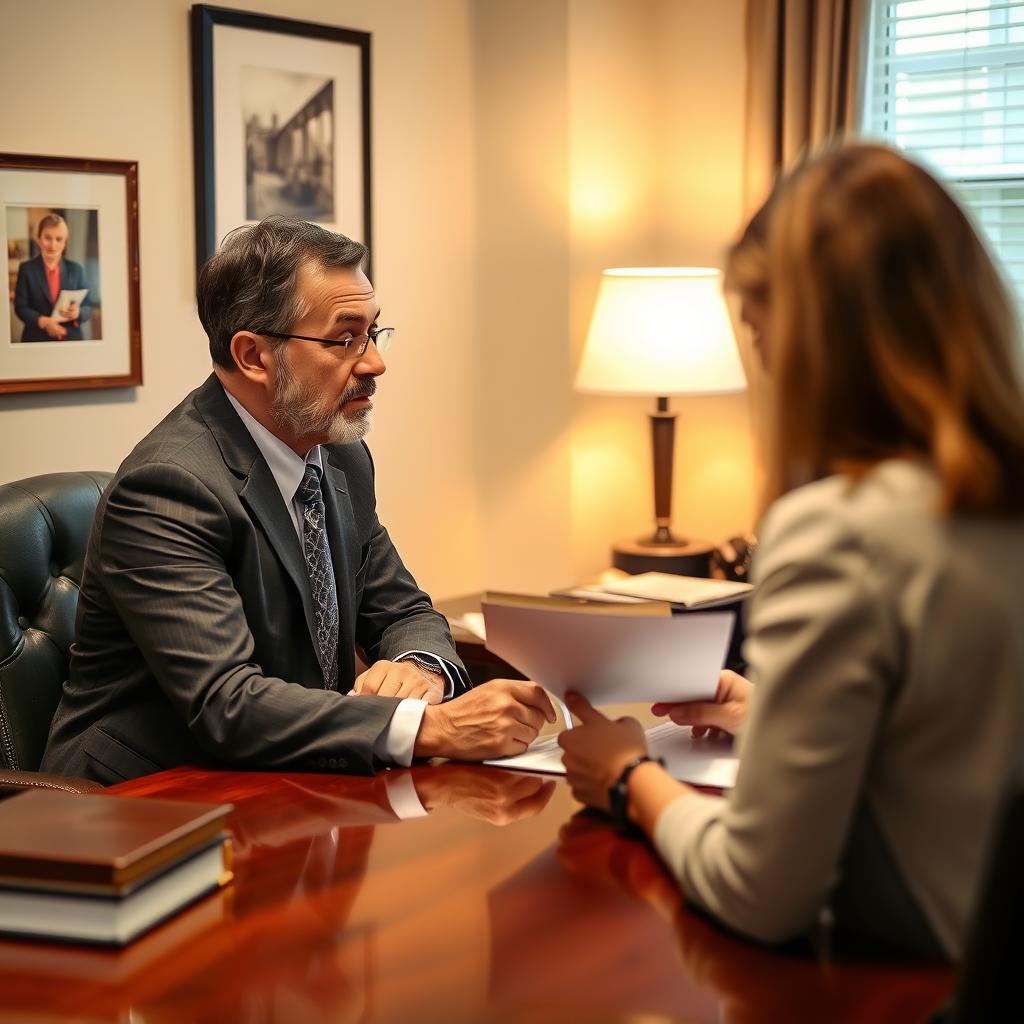
Marital Settlement Agreement Lawyer Virginia, VA
When a marriage ends or a couple wants to formalize their separation, a marital settlement agreement — sometimes called a property settlement agreement or separation agreement — becomes a central document. Law Offices Of SRIS, P.C. Concentrates its Virginia family law practice on helping clients negotiate, draft, and finalize marriage settlement agreements that resolve the financial and parenting issues of divorce without a trial. Mr. Sris and his Of Counsel appear in the circuit courts of the Commonwealth, including the Fairfax County Circuit Court, the Prince William County Circuit Court, the Loudoun County Circuit Court, and courts in all Virginia localities, to present agreements that comply with the equitable‑distribution framework of Va. Code § 20‑107.3 and the trusted‑interest standards that govern custody and child support. Law Offices Of SRIS, P.C. — Advocacy Without Borders.
Whether the agreement resolves an uncontested divorce or lays the groundwork for a contested case that settles before a final hearing, a well‑drafted marital settlement agreement can avoid prolonged litigation and give both parties control over the outcome. For a consultation about your situation, reach our Fairfax Location at (888) 437‑7747.
What Marital Settlement Agreements Mean in Virginia
Virginia is an equitable‑distribution state, not a community‑property state. Under Va. Code § 20‑107.3, the court classifies property as marital, separate, or hybrid, then distributes it equitably — not necessarily equally — after considering eleven statutory factors. A marital settlement agreement allows spouses to decide for themselves how to classify and divide their assets, debts, and retirement accounts, rather than leaving those decisions to the court. When a couple signs a comprehensive property settlement agreement before the divorce is filed, the agreement can be incorporated into the final decree, making its terms enforceable as a court order.
In Virginia, a marital settlement agreement also serves the procedural purpose of supporting a no‑fault divorce on the ground of six months’ separation when the parties have no minor children, under Va. Code § 20‑91(9)(b). The agreement must resolve all issues — property division, spousal support, and, if children are involved, custody, visitation, and child support — to satisfy the six‑month ground. When a comprehensive agreement is signed, the divorce may proceed without the one‑year separation that is otherwise required for a no‑fault divorce when children are involved. The agreement must be in writing, signed by both parties, and must reflect a meeting of the minds.
How Mr. Sris and His Of Counsel Handle Marital Settlement Agreement Cases
Marital settlement agreement work requires a thorough understanding of Virginia’s equitable‑distribution statute, the child‑support guidelines, and the trusted‑interest factors for custody, all of which interact when an agreement is being negotiated. Mr. Sris and his Of Counsel begin by identifying the full scope of marital and separate property, including retirement accounts, business interests, real estate, and debts. This step is necessary to ensure that the agreement addresses every asset and liability that would be subject to distribution.
After the property is identified and valued, the focus shifts to negotiation. Many marital settlement agreements are reached through structured settlement discussions, with each party represented by counsel, rather than through a contested hearing. When an agreement cannot be reached through direct negotiation, mediation may be used to resolve remaining issues. Once all terms are agreed upon, the agreement is reduced to writing, reviewed by both parties and their respective counsel, and signed. The Circuit Court in the jurisdiction where the divorce is filed then reviews the agreement at the time of the final hearing to determine whether it is fair and entered into voluntarily. If the court finds the agreement proper, it is incorporated into the final decree of divorce.
About Mr. Sris and His Of Counsel Team
Mr. Sris, Owner and Founder of Law Offices Of SRIS, P.C., has practiced family law in Virginia since 1997. He is a former prosecutor whose trial experience informs his negotiation strategy, particularly on the financial and custody issues that marital settlement agreements must resolve. His practice concentrates on the equitable‑distribution and support aspects of Virginia divorce work, and he appears regularly in circuit courts across the Commonwealth.
Mr. Sris and his Of Counsel bring over 120 years of combined legal experience and 4,739+ documented firm-wide results. Results may vary. The Of Counsel attorneys who contribute to the firm’s family law practice include practitioners with backgrounds in criminal law, child welfare, and complex civil litigation — all of which bear on the negotiation and drafting of comprehensive settlement agreements.
Frequently Asked Questions
What is a marital settlement agreement in Virginia?
A marital settlement agreement is a written contract between spouses that resolves all issues arising from their marriage, including division of property and debts, spousal support, and, if applicable, custody, visitation, and child support. Once signed and incorporated into a final decree of divorce, it becomes a court‑enforceable order. In Virginia, such an agreement can also permit a no‑fault divorce after six months of separation when the parties have no minor children.
Do I need a lawyer for a marital settlement agreement in Virginia?
You are not legally required to hire a lawyer to sign a marital settlement agreement, but the agreement affects property rights, support obligations, and child custody. Each party should have independent legal counsel to review the agreement before signing. For guidance on your specific situation, reach Law Offices Of SRIS, P.C. at (888) 437‑7747.
How does a marital settlement agreement affect equitable distribution?
Under Va. Code § 20‑107.3, the court divides marital property equitably after considering eleven factors. A marital settlement agreement allows the parties to agree on their own division of property, which the court will typically approve if it is fair and voluntarily entered into. The agreement can also address the classification of property as marital or separate, avoiding litigation over that question.
Can a marital settlement agreement be modified after divorce?
Property division provisions in a marital settlement agreement that have been incorporated into a final decree are generally not modifiable, except for fraud, duress, or mutual mistake. Spousal‑support provisions may be modified if the agreement expressly permits modification and there has been a material change in circumstances. Child‑custody and child‑support provisions are always subject to modification based on the best interests of the child and a material change in circumstances.
What happens if we cannot reach a marital settlement agreement?
If negotiation and mediation do not produce an agreement, the case proceeds to a contested divorce. The court will then decide all unresolved issues after a hearing. Even in contested cases, many issues settle before trial, and the settlement terms can still be reduced to a written agreement and presented to the court. To discuss the details of your matter, contact Law Offices Of SRIS, P.C. at (888) 437‑7747.
Where can I find a marital settlement agreement lawyer near me in Virginia?
Law Offices Of SRIS, P.C. represents clients throughout Virginia, from the Northern Virginia counties of Fairfax, Loudoun, and Prince William to Richmond, the Shenandoah Valley, and beyond. Our Fairfax Location serves clients across the Commonwealth. For a consultation, reach Mr. Sris and his Of Counsel at (888) 437‑7747.
Related practice areas: family law lawyer Fairfax County · family law lawyer Prince William County · family law lawyer Loudoun County · separation agreement lawyer Virginia · divorce lawyer Virginia