
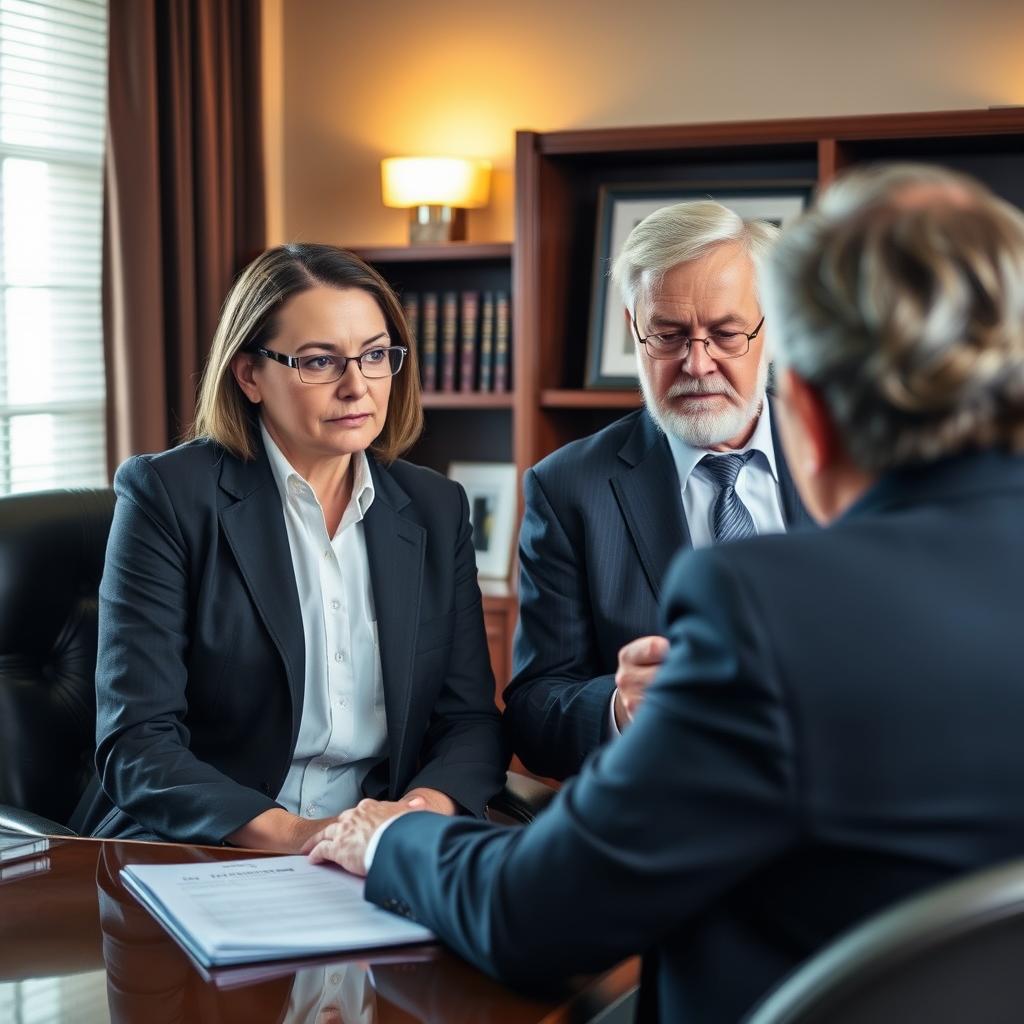
Rehabilitative Alimony Lawyer York County, VA
When a marriage ends and one spouse needs financial support to gain the skills or education necessary for self-sufficiency, Virginia courts may award rehabilitative alimony under Va. Code § 20‑107.1. This form of spousal support is designed to be temporary—it provides a bridge while the dependent spouse completes a training program, earns a degree, or otherwise re-enters the workforce. In York County, rehabilitative alimony matters are heard in the York County Circuit Court, which has exclusive jurisdiction over divorce and equitable distribution, and in some circumstances in the York County Juvenile and Domestic Relations District Court for standalone support issues. Mr. Sris and his Of Counsel team have extensive experience representing clients in spousal support disputes across the Ninth Judicial District, including Yorktown, Grafton, Tabb, and Seaford. Whether you are seeking support or responding to a request for rehabilitative alimony, having an attorney who understands both the statutory factors and the local court practices can be critical. For a consultation, reach Law Offices Of SRIS, P.C. at (888) 437‑7747. Law Offices Of SRIS, P.C. — Advocacy Without Borders.
What Rehabilitative Alimony Means in York County, Virginia
Rehabilitative alimony is monetary support that a court orders one spouse to pay to the other for a defined period—typically to allow the recipient to obtain job training, education, or other resources needed to become financially independent. Unlike permanent or indefinite support, rehabilitative alimony is forward-looking and tied to the recipient’s plan for self-sufficiency. Under Va. Code § 20‑107.1, the court evaluates thirteen statutory factors to determine whether an award is appropriate, including the duration of the marriage, each party’s age and health, earning capacities, contributions to the family, and the standard of living established during the marriage.
York County courts analyze these factors in the context of the local economy and job market. The York County Circuit Court, located at 300 Ballard Street in Yorktown, presides over all divorce-related spousal support disputes, while the York County J&DR District Court addresses support issues in custody or protective-order proceedings. Virginia’s equitable distribution framework also interacts with spousal support, because the division of marital assets may affect one party’s need for continued support. A thorough presentation of vocational evidence, budgets, and other financial documentation is often central to a successful argument for or against rehabilitative alimony. Because the factors are broad and fact-specific, the outcome in any given York County case depends heavily on the particular circumstances of the parties.
How Mr. Sris and His Of Counsel Handle Rehabilitative Alimony Cases
When a York County resident contacts Law Offices Of SRIS, P.C. about rehabilitative alimony, the first step is a careful review of the financial picture—both the supporting spouse’s ability to pay and the dependent spouse’s need and plan for self-sufficiency. Mr. Sris and his Of Counsel gather income and expense records, analyze vocational assessments or educational enrollment, and identify the specific statutory factors that weigh for or against an award. If the parties are still negotiating a separation agreement, the team works to craft a support provision that is realistic and aligned with Virginia law; if the matter is already in litigation, they prepare to present a well-organized case to the judge.
The team is equipped to handle the full range of rehabilitative alimony disputes, from initial pendente lite requests for temporary support while a divorce is pending, through final support determinations at trial, and including post-decree enforcement or modification actions. In York County, the court calendar and local procedural expectations can influence the pace of a case, and Mr. Sris and his Of Counsel routinely appear in the Circuit Court and the J&DR District Court, bringing deep familiarity with how those courts manage family law dockets. Every matter receives individual case review, and each client’s goals guide the strategy—whether that means negotiating an agreed order or taking a contested issue to hearing.
About Mr. Sris and His Of Counsel Team
Mr. Sris, Owner and Founder of Law Offices Of SRIS, P.C., has practiced family law since 1997. A former prosecutor, he testified before the Virginia House Courts of Justice Committee in support of 2019 HB 635 (chief patron Del. David Bulova). He is admitted to practice in Virginia, Maryland, the District of Columbia, New Jersey, and New York, and focuses his personal caseload on detailed family and domestic relations matters. Mr. Sris leads a team of Of Counsel attorneys who bring over 120 years of combined legal experience and 4,739+ documented firm-wide results to every matter. Results may vary.
All non-Sris lawyers associated with the firm are Of Counsel, a designation indicating their status as independent professionals who collaborate with Mr. Sris to serve clients. This structure provides clients with the benefits of a multi-attorney team without diluting the direct oversight that Mr. Sris maintains over each case. The team’s collective experience spans a broad range of family law issues, including contested and uncontested divorce, equitable distribution, and all forms of spousal support, and they are well-acquainted with the courts of York County and the surrounding region.
Frequently Asked Questions
What is rehabilitative alimony in Virginia?
Rehabilitative alimony is a type of spousal support ordered for a limited time to enable a dependent spouse to obtain education, training, or work experience so they can become self-supporting. The court sets a dollar amount and a duration based on the recipient’s plan for rehabilitation, such as completing a degree or certification program. Unlike permanent support, rehabilitative alimony is tied to a specific goal and ends when the recipient is expected to be able to support themselves, or at the end of the defined term. The request must be supported by evidence showing a realistic path to independence and the financial needs during the transition.
Can rehabilitative alimony be modified after it is ordered?
A rehabilitative alimony award can be modified if either party experiences a material change in circumstances, such as a substantial change in income, employment status, or the recipient’s ability to complete the planned rehabilitation. The party seeking modification must file a motion and present evidence to the court demonstrating the change. However, if the support agreement or court order contains a provision stating that the award is non-modifiable, or if the defined term has expired, the court generally will not change it. An attorney can evaluate whether the specific facts support a modification request and, if so, help prepare the necessary filings for the York County Circuit Court.
Do I need a lawyer to handle a rehabilitative alimony case in York County?
While you are not legally required to hire a lawyer, spousal support disputes involve detailed financial evidence, statutory factors, and procedural rules that can be difficult to navigate without professional guidance. The York County Circuit Court expects parties to present well-organized testimony and documentary evidence, and the outcome can have long-term financial consequences for both sides. Mr. Sris and his Of Counsel have experience working within the York County family law system and can assess the strengths of your position, negotiate on your behalf, and advocate for a fair resolution in court if necessary. For guidance on your specific situation, reach Law Offices Of SRIS, P.C. at (888) 437‑7747.
How do York County courts decide the amount and duration of rehabilitative alimony?
York County courts apply the same thirteen factors listed in Va. Code § 20‑107.1 when determining rehabilitative alimony. The judge weighs each spouse’s financial resources, earning capacity, contributions to the marriage, age, physical and mental condition, and the standard of living established during the marriage. The recipient’s proposed rehabilitation plan—such as enrollment in a specific training program or job search timeline—is central to the court’s analysis. The court typically sets a dollar amount and an end date based on how long it should reasonably take to achieve self-sufficiency. Because the factors are wide-ranging, no two cases are alike, and the specific facts of each party’s situation drive the final decision.
Where can I find a rehabilitative alimony lawyer near York County, Virginia?
Many York County residents work with Law Offices Of SRIS, P.C., which has a Richmond Location that serves clients throughout the Ninth Judicial District, including Yorktown, Grafton, Tabb, and Seaford. The firm’s toll‑free number is (888) 437‑7747. Consultations are available by appointment, and the team can schedule meetings to discuss your rehabilitative alimony matter. You can also review the Virginia State Bar’s online lawyer directory for additional options, but it is wise to choose counsel who regularly appears in York County Circuit Court and understands the local procedural and evidentiary expectations.
Related pages: James City County Family Law Lawyer · Williamsburg Family Law Lawyer · Fairfax County Family Law Lawyer · Fairfax City Family Law Lawyer · Falls Church Family Law Lawyer
Virginia primary sources: Va. Code § 20‑107.1 · Virginia Judicial System · Virginia State Bar Attorney Directory
Attorney advertising. Prior results do not guarantee a similar outcome. Case results depend on a variety of factors unique to each case. Results may vary.
For the background behind a York County case, our page explains how Virginia handles rehabilitative alimony.