
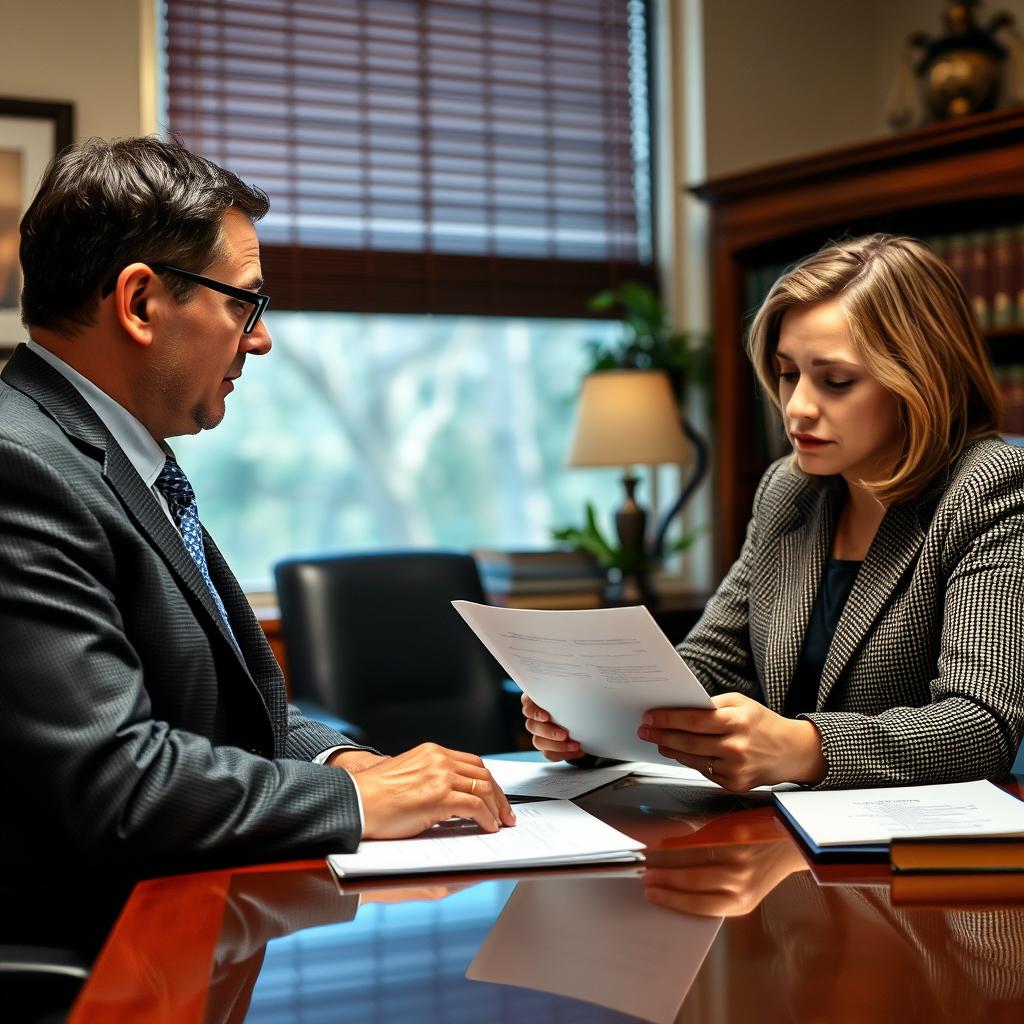
Standby Guardianship Lawyer Fauquier County, VA
Planning for your child’s future care means preparing for circumstances that may leave you temporarily or permanently unable to act as their primary guardian. Standby guardianship is a Virginia family‑law mechanism that allows a parent to designate a person who can step into a guardianship role when the parent is medically incapacitated, deployed, or otherwise unable to make daily decisions for the child. In Fauquier County, these petitions are heard in the Circuit Court, where a judge evaluates whether the proposed arrangement serves the best interests of the child. Mr. Sris and his Of Counsel guide parents through the entire standby‑guardianship process — from the initial planning discussion and preparation of the written designation to filing the petition and appearing in court. If you are considering a standby‑guardianship nomination for your child in Fauquier County, reach Law Offices Of SRIS, P.C. at (888) 437‑7747 to request a consultation. Law Offices Of SRIS, P.C. — Advocacy Without Borders.
What Standby Guardianship Means in Fauquier County, Virginia
Standby guardianship is a planning tool created by the Virginia General Assembly under Va. Code § 64.2‑2000 et seq. It allows a parent or legal custodian to name an individual who will become the child’s guardian if a specific triggering event occurs — most commonly, the parent’s serious illness, mental incapacity, or death. The designated standby guardian does not automatically assume authority; a court must confirm the appointment after the triggering event, and the judge will apply the trusted‑interest standard that governs all matters involving minor children. In Fauquier County, the Circuit Court at 6 Court Street, Warrenton, VA 20186 handles standby‑guardianship petitions as part of its general equitable jurisdiction over children. The process is civil, not adversarial, although interested relatives or the other parent may object to the nomination, turning the proceeding into a contested matter.
Because standby guardianship affects parental rights, custody, and the child’s living arrangements, the court examines the plan carefully. The parent must execute a written designation that identifies the proposed standby guardian and describes the triggering circumstances. The designation can be made in advance, often as part of an estate plan or a broader family‑law strategy, and it becomes effective only when the triggering condition occurs and the court confirms it. Experienced family‑law counsel can help Fauquier County parents structure the designation so that it satisfies all statutory requirements and minimizes the risk of a later challenge.
How Mr. Sris and His Of Counsel Handle Standby Guardianship Cases
Mr. Sris and his Of Counsel approach standby guardianship as a collaborative planning process. They meet with the parent to understand the family’s needs, the child’s daily routine, and the reasons a standby arrangement is necessary. The team then prepares a written designation that complies with the detailed requirements of the Virginia Code — including the nomination language, the triggering events, and any conditions the parent wishes to impose. If the proposed standby guardian needs to consent or provide background information, counsel coordinates that communication while protecting the parent’s priorities.
When the triggering event occurs, Mr. Sris and his Of Counsel file the petition in Fauquier County Circuit Court, serve all interested parties, and present the case at a hearing. If a challenge arises, the team responds with evidence and argument that focus on the statutory factors and the child’s welfare. Throughout the matter, counsel works to resolve disputes as efficiently as possible, always keeping the child’s stability at the center of the representation. Every standby‑guardianship matter is handled with the understanding that the parent is making a difficult, forward‑looking decision for the child’s future.
About Mr. Sris and His Of Counsel Team
Mr. Sris, Owner and Founder of Law Offices Of SRIS, P.C., has concentrated his practice on family law, including guardianship and custody matters, since founding the firm in 1997. A former prosecutor, he brings an informed perspective to court proceedings and to the practical challenges parents face when planning for a child’s care. Mr. Sris is admitted to practice in Virginia, Maryland, the District of Columbia, New Jersey, and New York, giving the firm the ability to assist families whose circumstances may cross state lines.
Mr. Sris is supported by a team of experienced Of Counsel who share the firm’s commitment to thorough preparation and clear communication. Mr. Sris and his Of Counsel bring over 120 years of combined legal experience to family‑law representations and have achieved over 4,739 documented firm-wide results. Results may vary. Together, they work to ensure that every standby‑guardianship petition is filed correctly and that the court has the information it needs to make a well‑reasoned decision in the child’s best interests.
Frequently Asked Questions
What is standby guardianship under Virginia law?
Standby guardianship is a statutory process set out in Va. Code § 64.2‑2000 et seq. That allows a parent to designate an adult who will become the child’s guardian upon the occurrence of a specified triggering event, such as the parent’s death, mental incapacity, or physical debilitation. The appointment does not take effect automatically; the standby guardian must petition the Circuit Court for confirmation. The court then evaluates whether the appointment serves the child’s best interests. This tool gives parents a way to plan for their child’s care without immediately transferring custody and can be incorporated into a broader family‑law or estate‑planning strategy.
Do I need a lawyer to file a standby‑guardianship petition in Fauquier County?
You are not legally required to hire a lawyer to file a standby‑guardianship petition, but legal guidance helps ensure the written designation meets all statutory requirements and that the petition is properly presented to the Fauquier County Circuit Court. Mistakes in the designation or in the procedural steps can delay confirmation or provide grounds for a challenge. Mr. Sris and his Of Counsel work with parents to draft the designation, file the petition, and advise on how to address objections from other family members. For a discussion of your specific situation, contact Law Offices Of SRIS, P.C. at (888) 437‑7747.
How is standby guardianship different from legal guardianship or custody?
Standby guardianship is forward‑looking; a parent nominates a guardian to step in only if and when a triggering event occurs. Legal guardianship, by contrast, is a present transfer of decisional authority over the child, often filed when a parent is currently unable to care for the child. Custody orders determine physical and legal custody between parents and can be modified by the court. Standby guardianship allows a parent to keep full parental authority while establishing a clear succession plan. The Fauquier County Circuit Court treats standby‑guardianship petitions as family‑law matters, applying best‑interest analysis similar to that used in custody and guardianship cases.
What must a standby‑guardianship petition in Fauquier County include?
A petition for confirmation of a standby guardian must include a copy of the written designation signed by the parent, a description of the triggering event that has occurred, and a proposed order. The petition is filed in the Fauquier County Circuit Court, and notice must be given to any other parent or guardian whose rights may be affected. The court may require additional documents such as a consent form signed by the proposed standby guardian. The exact procedural requirements are determined by the Virginia statute and by local court practice. Mr. Sris and his Of Counsel prepare all necessary filings and ensure that the court receives a complete submission.
What happens if someone objects to my standby‑guardianship nomination?
If a relative or the other parent objects, the court will hold a hearing to determine whether the standby‑guardianship arrangement is in the child’s best interests. The objecting party must present evidence to support their position. Mr. Sris and his Of Counsel represent the designated parent through the contested process, presenting evidence about the child’s relationship with the nominated guardian, the stability of the proposed living arrangement, and the reasons the parent made the designation. The court’s decision is based on the statutory factors and the child’s welfare, not on any party’s preference alone.
How does the court decide who becomes the standby guardian?
The Fauquier County Circuit Court considers the same types of factors that apply in other child‑centered decisions: the child’s age, health, and emotional ties; the proposed guardian’s ability to provide a stable home; the parent’s expressed wishes; and any history of family abuse or neglect. Because the parent has already nominated a specific individual, the court gives substantial weight to that nomination, provided the proposed guardian is suitable and the arrangement serves the child’s interests. Mr. Sris and his Of Counsel present testimony, documents, and any other relevant information to demonstrate that the nominated standby guardian is the appropriate choice for the child’s long‑term welfare.
For additional information on family law matters in nearby counties, please see our pages on family law representation in Fairfax County, family law lawyer in Prince William County, Stafford County family law attorney, and Loudoun County family law services.
Outbound primary sources: Virginia Code Title 64.2 · Virginia’s Judicial System · Fauquier County Circuit Court
Attorney advertising. Prior results do not guarantee a similar outcome.
Case results depend on a variety of factors unique to each case.