
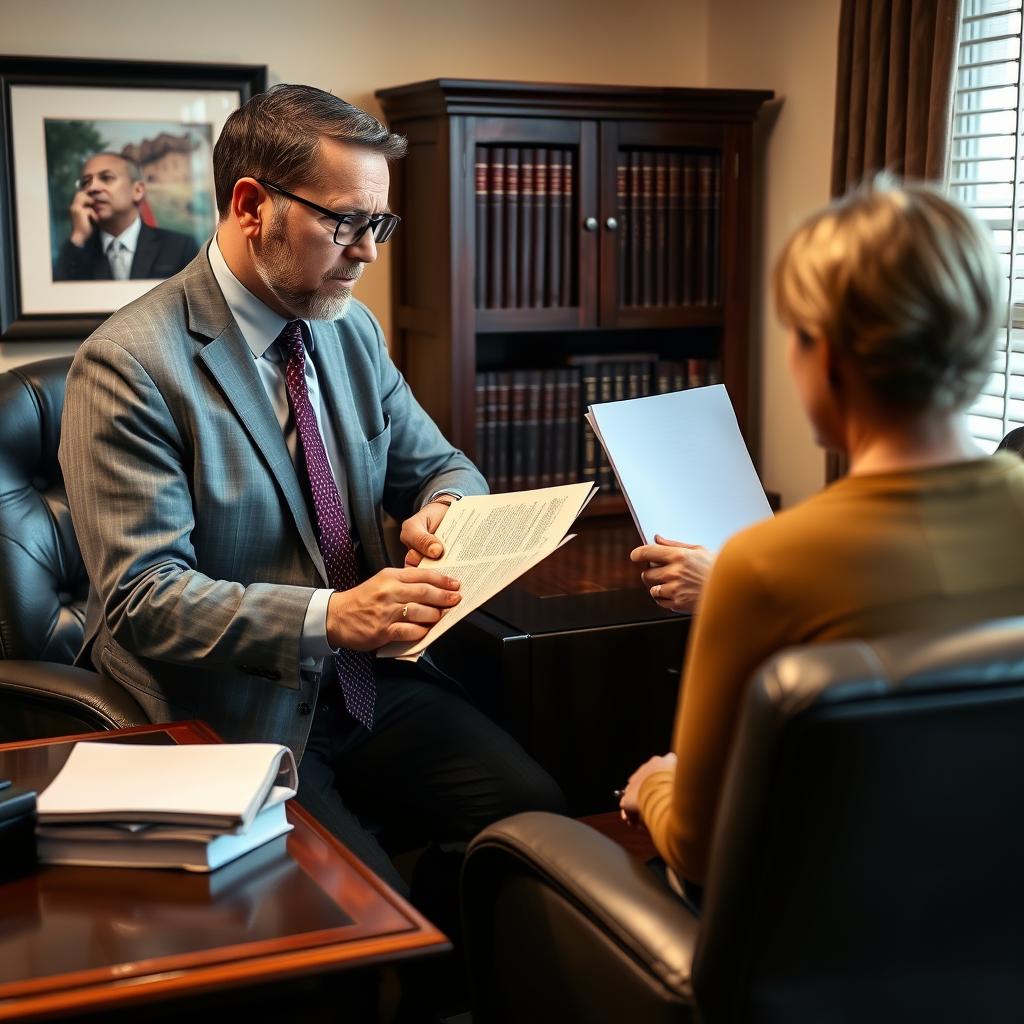
Indian Divorce Lawyers Serving Virginia, Maryland & the District of Columbia
A Hindu Marriage Act 1955 or Special Marriage Act 1954 union solemnized in India is recognized in Virginia, Maryland, and the District of Columbia for divorce — provided the filing spouse meets the 6-month residency requirement under Va. Code § 20-97, Md. Code Family Law § 7-101, or D.C. Code § 16-902. Law Offices of SRIS, P.C., founded 1997 by Mr. Sris (former prosecutor; admitted in VA, MD, DC, NJ and NY; speaks English and Tamil), handles NRI cross-border divorce across all three jurisdictions, with 4,739+ documented case results firm-wide across VA, MD, DC, NY and NJ.
- In our experience handling NRI divorce cases at Fairfax County Circuit Court (4110 Chain Bridge Road) and Montgomery County Circuit Court (50 Maryland Avenue, Rockville), service of process on the Indian-domiciled spouse follows standard out-of-state service procedure under each jurisdiction's rules — Va. Code § 8.01-320 (personal service abroad in the same manner as inside the Commonwealth) or § 8.01-316 (publication when address unknown); Md. Rule 2-121 / 2-122; D.C. Super. Ct. Civ. R. 4. There is no special international-service procedure for family cases.
- We have seen Indian cruelty/dowry-harassment complaints (Section 85 BNS (formerly Section 498A IPC) filed against U.S.-domiciled NRIs trigger Look-Out Circulars (LOCs) at Indian Bureau of Immigration counters within 14 days of filing — meaning an NRI traveling back to India for a wedding, funeral, or business is detained at IGI Delhi, BLR Bengaluru, or BOM Mumbai before clearing immigration. This is the single highest-stakes parallel-proceeding risk in NRI divorces and it must be addressed before the U.S. spouse is served with the U.S. divorce complaint.
- Mr. Sris speaks English and Tamil and personally handles complex cross-border family law for NRI clients across the firm's five-state footprint; Kristen M. Fisher (Of Counsel; Former Maryland Assistant State's Attorney) covers Maryland-state filings out of the firm's Rockville location at 199 E. Montgomery Avenue.
On this page
ToggleCan I file for divorce in Virginia, Maryland, or DC if I am an NRI and my spouse lives in India?
Yes — visa status is irrelevant to U.S. divorce jurisdiction. What matters is actual physical residence: Virginia and Maryland each require 6 months residency (Va. Code § 20-97; Md. Code Family Law § 7-101); D.C. requires 6 months (D.C. Code § 16-902). On grounds: Maryland recognizes mutual consent (no separation required), 6-month separation, or irreconcilable differences (§ 7-103, as amended October 1, 2023). The District of Columbia, since the January 26, 2024 amendment to D.C. Code § 16-904, grants divorce on the assertion alone — no separation period required at all. Virginia retains a 1-year separation requirement (or 6 months if no minor children plus signed settlement agreement) under Va. Code § 20-91(9). The Indian-domiciled spouse need not consent or appear — service follows standard out-of-state service rules under each jurisdiction (Va. Code § 8.01-320; Md. Rule 2-121; D.C. Super. Ct. Civ. R. 4) — typically by private process server in India, and a default decree is available if the spouse fails to respond after proper service.
The Statutory Framework: India and the U.S. Side-by-Side
Indian Marriage and Divorce Statutes
Indian marriage and divorce are governed by religion-specific personal-law statutes plus a secular civil-marriage option:
- Hindu Marriage Act 1955 (HMA) — applies to Hindus, Buddhists, Jains, and Sikhs. Section 13 enumerates divorce grounds (adultery, cruelty, desertion for 2 years, conversion, mental disorder, communicable disease, renunciation, presumption of death of 7+ years). Section 13B added in 1976 permits divorce by mutual consent after 1 year separation plus a statutory 6-month "cooling off" period (which the Supreme Court held directory rather than mandatory and waivable in appropriate cases — Amardeep Singh v. Harveen Kaur (2017) 8 SCC 746; affirmed by Constitution Bench in Shilpa Sailesh v. Varun Sreenivasan (2023) using Article 142 powers).
- Special Marriage Act 1954 (SMA) — secular civil-marriage statute available regardless of religion; used for inter-faith marriages, court marriages, and increasingly by NRI couples seeking a registered civil certificate. Divorce grounds parallel HMA Section 13 but are codified in SMA Section 27.
- Indian Divorce Act 1869 — governs divorce for Indian Christians.
- Muslim Personal Law (Shariat) Application Act 1937 plus the Muslim Women (Protection of Rights on Marriage) Act 2019 — the latter criminalized instant triple talaq.
- Dowry Prohibition Act 1961 — criminal statute against dowry demands; foundation for cruelty complaints (Section 85 of the Bharatiya Nyaya Sanhita 2023 (formerly Section 498A IPC, in force from 1 July 2024).
- Protection of Women from Domestic Violence Act 2005 (PWDVA) — civil statute permitting protection, residence, monetary, custody, and compensation orders against any "respondent" in a domestic relationship.
U.S. State Divorce Statutes Applicable to NRIs in the DMV
For NRI divorces filed in our three core jurisdictions, the controlling statutory frameworks are:
- Virginia — Va. Code Title 20. Grounds: § 20-91. Equitable distribution: § 20-107.3. Spousal support: § 20-107.1. Custody: § 20-124.3 (welfare-of-the-child standard, 10 statutory factors). Residency: § 20-97 (6 months).
- Maryland — Md. Code Family Law Title 7 (divorce) and Title 8 (property division). Grounds: § 7-103 (as amended October 1, 2023 by Senate Bill 36 / House Bill 14 — three grounds: (1) mutual consent with signed settlement agreement, no separation required; (2) 6-month separation; (3) irreconcilable differences. All fault grounds repealed; limited divorce eliminated). Marital property: § 8-205. Residency: § 7-101 (6 months).
- District of Columbia — D.C. Code Title 16. Grounds: § 16-904(a) (as amended January 26, 2024 by D.C. Law 25-115 — sole ground is the assertion by one or both parties that they no longer wish to remain married; no separation period required). Equitable distribution: § 16-910 (2024 amendment added history of financial abuse as a factor). Custody: § 16-914. Residency: § 16-902 (6 months unchanged).
Founded in 1997 by Mr. Sris, former prosecutor, Law Offices of SRIS, P.C. brings 120+ years combined legal experience across all attorneys, with 4,739+ documented case results firm-wide across VA, MD, DC, NY and NJ and a favorable-outcome rate above 93%.
Last verified: May 2, 2026 | Sources: Virginia General Assembly (Va. Code Title 20) · Maryland General Assembly (Family Law § 7-103) · D.C. Council Code (§ 16-904)
Authoritative Sources Cited On This Page
Statutes and procedural rules referenced on this page are linked to their official government sources for verification: the Virginia General Assembly — official Va. Code Title 20; the U.S. Citizenship and Immigration Services — official site for any I-130 spouse-petition implications; the U.S. Department of State — International Parental Child Abduction page describing India's non-signatory status to the 1980 Hague Convention; and the Embassy of India, Washington D.C. — official site for document attestation, OCI/PIO matters, and consular reports of marriage and divorce abroad.
Insider Procedural Edge: Three Things That Trip Up NRI Divorces
In Fairfax County Circuit Court NRI divorce practice, service of process on an Indian-domiciled spouse follows standard Virginia out-of-state service procedure under Va. Code § 8.01-320 — personal service in India by an authorized person, in the same manner provided for service within the Commonwealth, with service by publication under Va. Code § 8.01-316 available when the spouse's address is unknown. Maryland uses Md. Rule 2-121 (out-of-state service) and Rule 2-122 (publication); the District of Columbia follows D.C. Super. Ct. Civ. R. 4 and D.C. Code § 13-431. There is no special international-service carve-out for family cases — you serve under the same long-arm rules you would use to serve a defendant in California or Texas.
The procedurally tighter NRI-specific concerns sit downstream of service. Virginia, Maryland, and the District of Columbia all recognize a marriage validly contracted in another jurisdiction under the conflict-of-laws doctrine of lex loci celebrationis; the petitioner alleges the marriage in the Complaint and the court does not conduct an independent inquiry into validity under Indian law unless the marriage itself is actively contested. The Indian marriage certificate functions as corroborating evidence, not as a precondition for the divorce. The actual NRI-specific concerns are: (1) inventorying Indian-located assets (NRE/NRO/FCNR accounts, Indian real estate, EPF/PPF, LIC policies, demat holdings) in the initial pleadings to anchor the equitable distribution claim under Va. Code § 20-107.3 — assets named in the Complaint travel through pendente lite into the final decree; assets surfaced for the first time at trial draw a credibility hit; (2) disclosing any parallel Indian proceeding — Section 85 BNS (formerly Section 498A IPC) cruelty complaint, Protection of Women from Domestic Violence Act 2005 petition, or Hindu Marriage Act § 13 proceeding pending in India — before opposing counsel surfaces it for the U.S. judge; and (3) if children are involved, addressing the child-abduction-prevention layer at filing: India is not a signatory to the 1980 Hague Convention on the Civil Aspects of International Child Abduction, so a child wrongfully retained in India after a U.S. custody order is generally outside the reach of Hague return remedies. Pre-emptive measures (CPIAP enrollment with the U.S. State Department, surrender or court-controlled custody of the minor's Indian passport, mirror-order coordination with Indian counsel) belong in the pleadings and pendente lite motions, not in post-judgment damage control.
In Montgomery County Circuit Court, Maryland's 2023 amendment permitting mutual-consent divorce without a separation period has reshaped NRI strategy. Where the parties can agree, the elimination of the 6-month or 12-month separation requirement closes the case in 60 to 90 days from filing — far faster than India's 6-month statutory cooling-off period under Hindu Marriage Act § 13B(2). For NRIs racing to finalize before an immigration filing deadline (AOS interview, naturalization N-400, I-130 fraud-indicator review), Maryland is now the procedurally fastest of the three jurisdictions for an uncontested matter.
In D.C. Superior Court Family Division, the bench is unusually familiar with international elements due to the District's diplomatic and World Bank/IMF expatriate population — judges generally accept apostilled foreign records without an evidentiary hearing on authenticity. The trade-off is procedural: D.C. requires both spouses to attend a Family Court Mediation Branch session before contested divorce can proceed to trial, which adds 60 to 120 days for an Indian-domiciled spouse who must appear telephonically through the Indian Embassy's video facility.
- Confirm 6-month residency in the chosen jurisdiction before filing.
- Obtain the underlying Indian marriage certificate (Hindu Marriage Act, Special Marriage Act, Indian Divorce Act, or Nikahnama) and consider apostilling it at the same time — apostille is the standard evidentiary mechanism for admission of foreign public documents in U.S. court but is not a precondition for filing.
- Identify and disclose any pending Indian cruelty proceeding (Section 85 BNS (formerly Section 498A IPC), PWDVA 2005, Hindu Marriage Act § 13, or Family Court proceeding in your initial pleading.
- Inventory all Indian-located assets (NRE/NRO/FCNR accounts, Indian real estate, EPF/PPF, LIC, mutual funds, gold/stridhan) for U.S. equitable distribution discovery.
- If minor children are involved, obtain ne exeat orders and CPIAP enrollment simultaneously with the divorce filing — not after a custody dispute begins.
- Serve process on the Indian-domiciled spouse using standard out-of-state service procedure under the chosen jurisdiction's rules — typically a vetted private process server in India for personal service when address is known, or service by publication when address is unknown.
Outcome Ranges in NRI Divorce Across VA, MD & DC
In Virginia, Maryland, and D.C., NRI divorce timelines and cost structures vary materially by jurisdiction, contested status, and the presence of Indian-located assets or parallel Indian proceedings.
| Procedural Factor | Virginia | Maryland | District of Columbia |
|---|---|---|---|
| Residency requirement | 6 months (Va. Code § 20-97) | 6 months (Md. Code Family Law § 7-101) | 6 months (D.C. Code § 16-902) |
| No-fault separation period | 6 months (no minor children + signed agreement); 1 year otherwise | None for mutual consent with signed settlement agreement; 6 months for separation ground; irreconcilable differences also available (§ 7-103 as amended Oct 1, 2023 by SB 36 / HB 14) | None — divorce granted on assertion alone, no separation period (§ 16-904 as amended Jan 26, 2024 by D.C. Law 25-115) |
| Court of original jurisdiction | Circuit Court of county/city of residence | Circuit Court for the county of residence | D.C. Superior Court — Family Division |
| Filing fee (divorce complaint, approximate) | $86 + sheriff service ~$12 | ~$165 | ~$80 |
| Property regime | Equitable distribution (Va. Code § 20-107.3) — 11-factor analysis | Marital property (Md. Code Family Law § 8-205) — 11-factor analysis | Equitable distribution (D.C. Code § 16-910) |
| Uncontested timeline (filing to decree) | 2 to 4 months after separation period satisfied | 60 to 90 days (mutual consent fastest in DMV) | 3 to 5 months |
| Contested timeline | 9 to 18 months | 9 to 15 months | 10 to 18 months |
| Foreign service / apostille add-on | Personal service in India by process server: 30–90 days; publication: 4–8 weeks; apostille: 2–6 weeks | Personal service: 30–90 days; publication: 4–8 weeks | Personal service: 30–90 days; publication: 4–8 weeks |
Results may vary. Timelines depend on court calendar, case complexity, and whether parallel Indian proceedings are pending.
Why NRI Clients in the DMV Choose Law Offices of SRIS, P.C.
Founded in 1997 by Mr. Sris, former prosecutor, Law Offices of SRIS, P.C. brings 120+ years combined legal experience, 4,739+ documented firm-wide results across VA, MD, DC, NY and NJ, and a favorable-outcome rate above 93%. The firm's lead attorney is admitted in all five firm-footprint states (Virginia, Maryland, District of Columbia, New Jersey, and New York) and speaks English and Tamil. The Maryland practice is led by Of Counsel Kristen M. Fisher, Former Maryland Assistant State's Attorney. The firm holds Track B aggregate ratings of 4.8 stars across 184 verified reviews at the Fairfax headquarters and 5.0 stars across 8 verified reviews at the Maryland location.
Across all of the firm's locations, what consistently distinguishes our representation in the NRI vertical is treatment of the Indian and U.S. proceedings as a single integrated strategy from day one — rather than handling each in isolation while the other deteriorates.
Attorneys Handling This Matter
Mr. Sris — Lead Attorney
Mr. Sris, former prosecutor, founded Law Offices of SRIS, P.C. in 1997. He testified before the Virginia legislature in support of 2019 HB 635 (chief patron Del. David Bulova), the bill that became the 2019 revision to Va. Code § 20-107.3(g).
Bar admissions: Virginia; Maryland; District of Columbia; New Jersey; New York.
Languages: English, Tamil.
Mr. Sris personally handles complex cross-border Indian and NRI family law matters across the firm's five-state footprint, integrating U.S. divorce strategy with parallel Indian Hindu Marriage Act, Special Marriage Act, Section 85 BNS (formerly Section 498A IPC) cruelty exposure, and Protection of Women from Domestic Violence Act 2005 exposure analysis. Profile: /our-team/#mr-sris.
Kristen M. Fisher — Of Counsel (Maryland)
Kristen M. Fisher, Former Maryland Assistant State's Attorney, Of Counsel (independent attorney working with Law Offices of SRIS, P.C.), joined the firm in 2010 and dedicates 75% of her practice to litigation.
Bar admissions: Maryland; Virginia.
Languages: English.
Of Counsel Fisher leads Maryland family-law filings out of the firm's Rockville location at 199 E. Montgomery Avenue, with a contested-litigation practice across Montgomery, Prince George's, Howard, and Anne Arundel County Circuit Courts. Profile: /our-team/#kristen-fisher.
Documented Case Results
Law Offices of SRIS, P.C. has 4,739+ documented case results firm-wide across VA, MD, DC, NY and NJ, with a favorable-outcome rate above 93%. Family law and family-law-adjacent dispositions in our verified case database include the following representative outcomes from Northern Virginia courts where a substantial NRI population resides.
| Court | Charge / Matter Category | Disposition | Outcome |
|---|---|---|---|
| Fairfax County General District Court | Assault on family/household member (Va. Code § 18.2-57.2) | Nolle Prosequi | Dismissed |
| Fairfax County General District Court | Assault and battery against family or household member (Va. Code § 18.2-57.2) | Nolle Prosequi | Dismissed |
| Fairfax County Juvenile & Domestic Relations District Court | Assault and battery against family or household member (Va. Code § 18.2-57.2) | Amended to simple assault and battery (Va. Code § 18.2-57) | Reduced |
| Prince William County Juvenile & Domestic Relations Court | Assault on a family member (Va. Code § 18.2-57.2) | Nolle prosequi | Dismissed |
| Orange County General District Court | Assault & Battery / Family (Va. Code § 18.2-57.2) | Nolle Prosequi | Dismissed |
Results may vary. Past results do not guarantee similar outcomes. Case results above are family-law-adjacent dispositions from our Virginia practice; NRI divorce outcomes depend heavily on contested status, presence of Indian-located assets, and parallel Indian proceedings.
Among NRI divorces handled at Fairfax County Circuit Court and Montgomery County Circuit Court over the past several years, three patterns have recurred: (1) clients who proactively addressed parallel Indian cruelty (Section 85 BNS (formerly Section 498A IPC) exposure on day one consistently shortened total resolution time by an estimated 4 to 8 months; (2) clients who delayed Indian-asset disclosure until contested discovery faced materially higher forensic-accounting costs and an adverse credibility framing in front of the U.S. judge; (3) clients with minor children who obtained ne exeat orders and CPIAP enrollment at the time of initial filing — rather than after a custody dispute crystallized — avoided the most catastrophic class of cross-border family-law outcome (an India-removed child with no Hague return remedy).
Comparison: Indian Divorce Procedure vs. U.S. (VA, MD, DC) Divorce Procedure
| Dimension | India (HMA / SMA / Indian Divorce Act) | United States (VA, MD, DC) |
|---|---|---|
| Statutory framework | Religion-specific personal laws (HMA 1955, SMA 1954, Indian Divorce Act 1869, Muslim Personal Law); civil option via SMA | Uniform state divorce statutes regardless of religion (Va. Code Title 20; Md. Code Family Law; D.C. Code Title 16) |
| Available grounds | Adultery, cruelty, desertion (2 years), conversion, mental disorder, communicable disease, renunciation, presumption of death, mutual consent (HMA § 13B / SMA § 28) | No-fault by separation (6 months in MD/DC, 6 months/1 year in VA); fault grounds: adultery, cruelty, desertion, felony conviction |
| Property regime | No equitable distribution — each spouse keeps assets in their name; joint property partitioned | Equitable distribution of all marital property, regardless of titling (Va. § 20-107.3; Md. § 8-205; D.C. § 16-910) |
| Spousal maintenance / alimony | Need-based, modest awards (HMA § 25; CrPC § 125) | Statutory factor analysis; routinely produces materially higher awards than Indian law |
| Mutual-consent cooling-off period | 6 months under HMA § 13B(2) (held directory, waivable in appropriate cases — Amardeep Singh v. Harveen Kaur (2017) 8 SCC 746; Shilpa Sailesh v. Varun Sreenivasan (2023) Constitution Bench) | None in MD (post-2023); separation period in VA/DC functions analogously |
| Contested case timeline | Typically 4 to 7 years through trial and appeal | 9 to 18 months in VA, MD, DC |
| Child custody framework | Guardians and Wards Act 1890 + HMA § 26; "welfare of minor" standard; tender-years presumption for children under 5 | Welfare-of-the-child standard under multi-factor statutes (Va. § 20-124.3; Md. § 9-101; D.C. § 16-914); no statutory tender-years presumption |
| Cross-border child abduction | India is NOT a signatory to the 1980 Hague Convention; remedy is habeas corpus in Indian High Court + Guardians and Wards Act petition | Hague Convention return remedy unavailable for India-removed children; CPIAP and ne exeat orders are the prevention tools |
| Recognition of foreign decree | Section 13 CPC: not recognized if obtained by fraud, lack of jurisdiction, or violation of natural justice | Comity (not Full Faith and Credit); 4-factor test (jurisdiction, notice, no fraud, public policy) |
Comparison reflects general framework. Specific case outcomes depend on facts, jurisdiction, and applicable amendments.
Locations Serving Indian/NRI Clients in VA, MD & DC
Indian/NRI cross-border family law lawyer near Fairfax, near Rockville, and near Washington, D.C. We serve the NRI communities of Herndon, Reston, Ashburn, Sterling, Chantilly, Centreville, Tysons, McLean, Vienna, Fairfax, Springfield, Annandale, Falls Church, Arlington, Alexandria, Manassas, Woodbridge, Leesburg (Virginia); Rockville, Bethesda, Silver Spring, Gaithersburg, Germantown, Potomac, Bowie, Columbia, Frederick, Baltimore (Maryland); and the District of Columbia. 24/7 phone consultations — (888) 437-7747 — meetings by appointment only.
Law Offices of SRIS, P.C.
4008 Williamsburg Court, Fairfax, VA 22032
Phone: (703) 636-5417 · Toll-free: (888) 437-7747
Hours: Phones 24/7/365 · Office by appointment Mon–Fri 9 AM–6 PM
Languages: English, Spanish, Tamil, French, Portuguese
By appointment only.
Law Offices of SRIS, P.C.
199 E. Montgomery Ave, Suite 100, Room 211, Rockville, MD 20850
Phone: (888) 437-7747
Hours: Phones 24/7/365 · By appointment
Languages: English, Spanish, Tamil
By appointment only.
Law Offices of SRIS, P.C.
1655 Fort Myer Dr, Suite 700, Room 719, Arlington, VA 22209
Phone: (703) 589-9250 · Toll-free: (888) 437-7747
Hours: By appointment only Mon–Fri 8:30 AM–5:00 PM · Phones 24/7
Languages: English, Spanish, Tamil
By appointment only.
Frequently Asked Questions: Indian / NRI Divorce in VA, MD & DC
1. Will a U.S. court (VA, MD, or DC) recognize my Indian Hindu marriage for purposes of divorce?
Yes. A marriage validly solemnized under the Hindu Marriage Act 1955 in India is recognized in Virginia, Maryland, and the District of Columbia under the lex loci celebrationis doctrine — a marriage valid where performed is valid for U.S. divorce jurisdiction.
Required proof: registered marriage certificate (mandatory in most Indian states since the 2006 Supreme Court of India order in Seema v. Ashwani Kumar) or, where no registration exists, the temple/gurudwara record plus two witnesses to the saptapadi (seven steps) and an Indian District Marriage Registrar certificate. Apostille under the 1961 Hague Apostille Convention (India is a party since 2005) makes the Indian marriage certificate self-authenticating as a foreign public document under U.S. evidence rules — it is the standard evidentiary mechanism but it is not a precondition for the court to grant the divorce. Virginia, Maryland, and D.C. all recognize a marriage validly contracted in another jurisdiction under lex loci celebrationis.
2. What is the difference between a Hindu Marriage Act 1955 and Special Marriage Act 1954 marriage for U.S. divorce purposes?
The Hindu Marriage Act 1955 governs marriages between two Hindus, Buddhists, Jains, or Sikhs and requires religious ceremonial elements. The Special Marriage Act 1954 is a civil/secular statute used for inter-faith couples and inter-caste unions. For U.S. courts, both are equally valid evidence of marriage.
The Special Marriage Act certificate is procedurally cleaner because it is always civilly registered, eliminating the need to prove religious ceremonial compliance (saptapadi for Hindus, anand karaj for Sikhs, etc.). For NRIs anticipating future U.S. legal proceedings — divorce, adoption, immigration, estate — the SMA route at the time of marriage avoids substantial documentation friction years later.
3. Can I get divorced in VA, MD, or DC if I am an NRI on H-1B, L-1, F-1, or H-4 status?
Yes, if you meet the 6-month residency requirement. Visa status is irrelevant to divorce jurisdiction in U.S. state courts — actual physical residence and domicile control.
What matters: where you actually live and whether you intend to remain. Virginia, Maryland, and D.C. each require 6 months of bona fide residency before filing. The Indian-domiciled spouse need not consent or appear; service of process follows standard out-of-state service rules under each jurisdiction (Va. Code § 8.01-320 personal service abroad, or § 8.01-316 service by publication when address unknown; Md. Rule 2-121 / 2-122; D.C. Super. Ct. Civ. R. 4). Private process server in India is the standard mechanism when address is known. A default decree is available if the Indian-domiciled spouse fails to respond after proper service. Note: an immigration spouse-petition (I-130) becomes vulnerable to fraud-indicator review if a divorce is filed shortly after AOS approval; integrate divorce timing with immigration counsel.
4. Can I file in the U.S. if my spouse has already filed under HMA § 13 in India?
Yes, but the analysis is fact-intensive. A pending Indian divorce does not automatically bar a U.S. action — there is no Hague Convention on jurisdictional priority in family matters between India and the United States.
The U.S. court analyzes forum non conveniens under traditional factors (witness access, evidence location, applicable law). For NRIs whose primary residence and assets are in the U.S., the U.S. forum is usually convenient and proper. The risk: parallel proceedings can produce inconsistent decrees on alimony, custody, and property — coordinated strategy from day one is required, including coordination with Indian counsel where the parallel proceedings cannot be stayed.
5. What is the U.S. exposure if my spouse files a cruelty/dowry-harassment complaint or a PWDVA 2005 petition against me in India?
Significant. The cruelty offense — formerly Section 498A of the Indian Penal Code 1860, now Section 85 of the Bharatiya Nyaya Sanhita 2023 (BNS replaced IPC effective July 1, 2024) — is a non-bailable, cognizable offense in India carrying up to 3 years imprisonment plus fine. PWDVA 2005 allows civil monetary, residence, and protection orders.
For an NRI on any U.S. visa status: an Indian arrest warrant or Look-Out Circular issued by the Bureau of Immigration can prevent re-entry to India and can be discovered by U.S. immigration authorities during AOS, naturalization, or re-entry inspection at IAD, JFK, EWR, ORD, ATL, LAX, SFO. CBP officers have access to Interpol Red Notices and can detain on entry. Treat any Indian Section 85 BNS (formerly Section 498A IPC) or DV Act 2005 filing as a parallel-track crisis requiring both Indian counsel (for the Indian proceedings) and U.S. counsel (for the U.S. divorce and immigration consequences).
6. How do U.S. courts handle Indian-located income and assets in equitable distribution?
Indian-located assets are within the reach of U.S. equitable distribution. Va. Code § 20-107.3, Md. Code Family Law § 8-205, and D.C. Code § 16-910 all define marital property by acquisition during marriage — geographic location is not a defense.
NRE/NRO/FCNR bank accounts, Indian real estate (flats in Mumbai, Bengaluru, Delhi NCR; plots in Tier-2 cities), EPF/PPF balances, LIC policies, demat/equity holdings, and ancestral property converted to self-acquired property all become subject to division. Discovery tools: subpoena to U.S. branches of Indian banks (HDFC, ICICI, SBI U.S. branches), Form 8938 and FBAR disclosures already filed with the IRS, Indian PAN-linked records via subpoena duces tecum on the spouse, and Form 26AS / Annual Information Statement disclosure through Indian Right to Information Act 2005 requests. The court can order an Indian asset to be sold and proceeds divided, or award an offsetting U.S. asset to the non-titled spouse.
7. Is stridhan recoverable in a U.S. divorce?
Yes — but characterized as separate property of the wife, not marital property.
Stridhan (gold jewelry, ornaments, gifts from natal family at marriage) is the wife's absolute property under both classical Hindu law and Indian Supreme Court precedent (Pratibha Rani v. Suraj Kumar, 1985). U.S. courts treat it the way Va. Code § 20-107.3(A)(1) treats premarital and gifted property: separate property excluded from equitable distribution. Practical issue: stridhan in the husband's family's physical possession in India is a parallel recovery proceeding (criminal breach of trust under former Section 314 BNS / formerly Section 405 IPC, now Section 314 of the Bharatiya Nyaya Sanhita 2023; Section 6 Dowry Prohibition Act 1961; or civil suit in Indian Family Court). The U.S. divorce decree cannot directly compel its return from Indian in-laws — but can value it and offset the wife's share of marital property accordingly.
8. If my spouse takes our child to India, can I get the child back under the Hague Convention?
No. India is not a signatory to the 1980 Hague Convention on the Civil Aspects of International Child Abduction. A return order from a VA, MD, or DC court is not directly enforceable in Indian courts.
The remedy in India is a habeas corpus petition in the High Court of the state where the child is held, plus a guardianship petition under the Guardians and Wards Act 1890 — both fact-intensive proceedings that turn on the Indian court's view of the child's welfare, not on the prior U.S. order. Prevention is the only reliable strategy: obtain a ne exeat order, surrender both U.S. and Indian passports of the child to the court, enroll in the U.S. Children's Passport Issuance Alert Program (CPIAP), and notify the Indian Embassy in Washington, D.C., that the U.S. parent objects to issuance or renewal of an Indian passport for the minor.
9. Does an Aadhaar number help me find hidden Indian assets in a U.S. divorce?
Indirectly, yes. Aadhaar itself is not a financial record, but every Indian bank account, mutual fund, EPF account, LIC policy, demat account, and most land registrations are now Aadhaar-linked or PAN-Aadhaar linked.
In U.S. discovery, a request for production of the spouse's Aadhaar card and PAN card opens a verification trail. From PAN, you can request the Form 26AS (Tax Credit Statement) and Annual Information Statement (AIS) from the Indian Income Tax Department under Indian RTI Act 2005, which lists every taxable Indian income source for the year. A U.S. subpoena cannot compel Aadhaar disclosure from the spouse if they refuse — but the court can draw an adverse inference under standard discovery sanctions (Va. Sup. Ct. R. 4:12; Md. Rule 2-433; D.C. Super. Ct. Civ. R. 37). Once the PAN is in evidence, Indian financial records flow.
10. How do I prove a Hindu marriage ceremony to a U.S. court when no formal certificate exists?
Layered evidence. Primary: registered Hindu Marriage Act certificate. Secondary if no registration: temple/gurudwara record, sworn affidavits from priest and witnesses describing saptapadi, photographs, video, vendor receipts, invitation cards.
Then secure a District Marriage Registrar certificate retroactively under the Compulsory Registration of Marriages Act of the relevant Indian state, apostille it under the Hague Apostille Convention (India is a party), and submit. Virginia, Maryland, and D.C. courts routinely accept this layered package, particularly when supported by an affidavit from the officiating priest authenticated through the Indian Embassy.
11. Will my Indian divorce decree be recognized in VA, MD, or DC?
Generally yes, by comity — but with significant caveats. U.S. state courts recognize foreign divorce decrees under principles of international comity, not the Constitution's Full Faith and Credit Clause (28 U.S.C. § 1738 applies only to sister-state judgments).
The recognized decree must satisfy four tests: (1) the foreign court had jurisdiction (at least one spouse domiciled in India at the time); (2) both parties had notice and opportunity to be heard; (3) the proceeding was not procured by fraud; (4) recognition does not violate U.S. public policy. Common failures: ex parte triple-talaq decrees (now criminalized in India under the Muslim Women (Protection of Rights on Marriage) Act 2019), unilateral khula, or one-spouse Hindu Marriage Act decrees obtained without service on the U.S.-domiciled spouse. To remove uncertainty, file an action to domesticate the foreign divorce decree in the appropriate VA, MD, or DC court before relying on it for remarriage, social security, or immigration filings.
12. Do I need to coordinate with the Indian Embassy or Consulate?
Often yes — especially for service of process, document apostille, OCI/PIO card matters affecting custody, and consular reports of marriage/divorce abroad.
The Embassy of India in Washington, D.C. (2107 Massachusetts Avenue NW) and the Consulate General of India in New York handle Maryland, Virginia, D.C., West Virginia, Pennsylvania, Delaware, and several other states. Typical interactions: (1) attestation of U.S. divorce decree for use in India; (2) issuance or surrender of a minor's Indian passport; (3) coordination on document attestation when a U.S. decree must be presented to Indian authorities; (4) advisory regarding Look-Out Circulars affecting NRI travel.
13. How does an Indian divorce procedurally differ from a VA, MD, or DC divorce?
Five major differences: statutory framework (personal laws vs. uniform state statutes), grounds (statutory grounds in India vs. no-fault available in U.S.), property regime (no equitable distribution in India vs. equitable distribution in U.S.), alimony (modest in India vs. higher U.S. awards), and speed (4–7 years in India vs. 9–18 months in U.S.).
See the comparison table above for jurisdiction-by-jurisdiction detail.
14. Which courts in VA, MD, and DC handle Indian/NRI divorce cases?
Virginia: Circuit Court of the county/city of residence (Va. Code § 20-96). Maryland: Circuit Court for the county of residence. D.C.: D.C. Superior Court Family Division.
High-NRI-population venues: Fairfax County Circuit Court (4110 Chain Bridge Road, Fairfax, VA 22030); Loudoun County Circuit Court (Leesburg); Prince William County Circuit Court (Manassas); Arlington County Circuit Court; Montgomery County Circuit Court (50 Maryland Avenue, Rockville, MD 20850); Howard County Circuit Court (Ellicott City); Prince George's County Circuit Court (Upper Marlboro); D.C. Superior Court Family Division (500 Indiana Avenue NW, Washington, D.C. 20001).
15. What does Indian/NRI divorce representation cost at Law Offices of SRIS, P.C.?
Fees depend on case complexity, contested versus uncontested status, presence of Indian-located assets, custody disputes, and parallel Indian proceedings. Court filing fees alone: VA ~$86; MD ~$165; DC ~$80.
Anticipate add-on costs: Indian apostille and document procurement ($300–$1,500); private process server in India ($500–$2,000); private process server in India for personal service ($500–$1,500); service by publication in Indian newspaper of record if address unknown ($200–$800); forensic accounting for Indian asset valuation ($3,000–$15,000); Guardian ad Litem in custody matters ($500–$2,500+). Consultation by appointment at (888) 437-7747 — payment plans available.
16. Can I represent myself pro se in an NRI divorce in VA, MD, or DC?
Legally permitted in all three jurisdictions but carries acute risk in cross-border matters.
The compounding factors — Hindu Marriage Act recognition, foreign-document authentication choices, foreign service of process logistics, parallel cruelty complaint (Section 85 BNS (formerly Section 498A IPC) or PWDVA 2005 exposure, Indian-asset discovery via Form 26AS and PAN-linked records, Hague non-signatory child abduction prevention, and visa-status interaction with criminal complaints — produce error rates that pro se litigants cannot reasonably absorb. A single missed evidentiary step, an unanswered Indian cruelty summons, or a child's Indian passport renewal not blocked through CPIAP can permanently change the outcome.
Entity Reference
- Mr. Sris
- founded — Law Offices of SRIS, P.C. (1997)
- testified before — Virginia House Courts of Justice Committee, 2019 HB 635 (chief patron Del. David Bulova)
- admitted in — Virginia, Maryland, District of Columbia, New Jersey, New York
- speaks — English, Tamil
- Law Offices of SRIS, P.C.
- operates in — Fairfax County Circuit Court; Montgomery County (MD) Circuit Court; D.C. Superior Court Family Division; Arlington County Circuit Court
- has results — 4,739+ documented case results firm-wide across VA, MD, DC, NY and NJ
- favorable outcome rate — 93%+
- Hindu Marriage Act 1955
- governs recognition of — Hindu, Buddhist, Jain, and Sikh marriages in India for U.S. divorce purposes
- recognized under — lex loci celebrationis doctrine in Virginia, Maryland, and District of Columbia
- India
- is not signatory to — 1980 Hague Convention on the Civil Aspects of International Child Abduction
- is party to — 1961 Hague Apostille Convention (since 2005)
- Va. Code § 20-107.3
- governs — equitable distribution of marital property in Virginia, including Indian-located assets
- Section 85 BNS (formerly Section 498A IPC) + Look-Out Circular
- creates risk of — detention on re-entry to India for U.S.-domiciled NRI; discoverable by U.S. immigration authorities
Related Resources at Law Offices of SRIS, P.C.
State family-law hubs: Virginia Divorce & Family Law · Maryland Divorce Laws · D.C. Divorce Lawyer
Indian / NRI cluster (single-jurisdiction): Indian Divorce Lawyer in Virginia (Statewide) · Fairfax County Indian Divorce Lawyer · Loudoun County Indian Divorce Lawyer · Arlington County Indian Divorce Lawyer
Adjacent practice areas: Foreign Divorce Decree Enforcement (VA) · Recognition of Foreign Divorce (VA) · Domesticating Foreign Divorce Decree (VA) · Indian Divorce Mediation (VA) · International Divorce & Cross-Border Family Law (VA)
Attorney profiles: Mr. Sris · Kristen M. Fisher
Office locations: Fairfax HQ · Maryland (Rockville) · Arlington (DC-area)